

Interview with Earl E. Thomas, Ed.D., about Fielding Graduate University's Online Doctor of Education (Ed.D.) in Leadership for Change Program
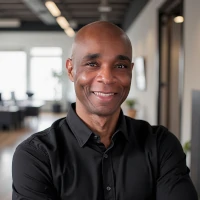
About Earl E. Thomas, Ed.D.: Earl E. Thomas is Program Director for the Doctor of Education (Ed.D.) in Leadership for Change degree program offered by the School of Leadership Studies at Fielding Graduate University. Before becoming Program Director, Dr. Thomas taught as Professor in the School of Leadership Studies, where he also served as the 2025-2026 Malcolm Knowles Chair in Adult Learning for the Ph.D. in Human and Organizational Development program. In his role as Ed.D. Program Director “no two days look the same,” as Dr. Thomas balances overseeing the curriculum, faculty development, program evaluation, and more.
Before arriving at Fielding Graduate University, Dr. Thomas was faculty at Saint Xavier University, where he is Professor Emeritus and directed the Master of Arts (M.A.) in Teaching and Leadership program. He also has extensive prior experience working in professional roles related to the federal Early Head Start program. Dr. Thomas holds his Ed.D. in Adult and Continuing Education and Teaching from Kansas State University and an M.A. in Adult and Continuing Education Administration from the University of Missouri-Kansas City.
Interview Questions
[OnlineEdDPrograms.com] May we begin with a brief description of your educational and professional background and your current position as Program Director of Fielding Graduate University’s online Ed.D. in Leadership for Change program?
[Dr. Earl Thomas] I have an Ed.D. from Kansas State University and an M.A. from the University of Missouri, both in adult education. I received my bachelor’s degree in psychology and sociology from the University of Missouri. My educational background launched me into various professional roles.
I have served extensively in the Head Start program. I was Associate Director of the first Early Head Start program at the University of Kansas Medical Center, and we became the national model for Early Head Start programs across all of the United States. I served as the Program Specialist for the federal Department of Health and Human Services overseeing training and technical assistance for Head Start and Early Head Start Programs in a four-state region.
I was Regional Field Specialist for ZERO TO THREE, which is an infant and toddler educational training program that provides national technical assistance services and support to Head Start programs, as well as federal offices across the country, in understanding how to oversee and implement the Early Head Start model. In addition, I have worked in training and technical assistance and in program compliance monitoring as the first federal infant toddler specialist for Head Start programs in Missouri, Kansas, Iowa, and Nebraska.
That was my entry point into university teaching. I am Professor Emeritus of Saint Xavier University in Chicago, Illinois, where I was Associate Professor and Academic Program Director for the Master of Arts in Teaching and Leadership program. I went on to work as a visiting professor at Rockford University in Rockford, Illinois and as Associate Dean for American International College in Massachusetts. I also served as Contributing Faculty at Walden University for 12 years, specializing in adult learning and higher education.
I am currently Academic Program Director for the Ed.D. in Leadership for Change program at Fielding Graduate University. I have also served as faculty and as Malcolm Knowles Chair in Adult Learning for the Ph.D. in Human and Organizational Development program in the School of Leadership. As Program Director for the Ed.D., my responsibilities evolve day-to-day. No two days look the same. We have redesigned our program over the past few years, and we are now in the process of implementing our new Ed.D. curriculum.
Some days, I am dealing strictly with curricula. Some days, I am focused on faculty development and work with core faculty and associate faculty to prepare for delivering our online program. I attend governance meetings across the university. I am a member of the Academic Senate. I am also responsible for evaluating program effectiveness. I work across the university on various committees monitoring program learning outcomes and assessing their relevance for what we want our program to deliver for our students.
[OnlineEdDPrograms.com] How have your experiences as the Malcolm Knowles Chair in Adult Learning for the Ph.D. in Human and Organizational Development program and as Professor shaped your approach to Program Director for Ed.D. in Leadership for Change program?
[Dr. Earl Thomas] My professional background has greatly informed my approach as the Academic Program Director of the Ed.D. program at Fielding Graduate University. As noted before, I am the 2025-2026 Malcolm Knowles Chair in Adult Learning. Dr. Malcolm Knowles was influential in the founding of Fielding Graduate University. Dr. Knowles is known as the American father of adult education for popularizing andragogy [the study and practice of teaching adult learners] in the educational literature.
The work of Malcolm Knowles has been very influential for my work. My doctoral dissertation modified an instrument for measuring andragogical principles and practices that was developed by Dr. John A. Henschke when he was faculty at the University of Missouri-St. Louis. My dissertation work examined andragogical principles and practices applied to parenting education. I have applied andragogical principles and practices throughout my career, including in my work directing training and technical assistance for Head Start and Early Head Start programs, in my work in higher education where I was leading and teaching in graduate programs, and in my current work here at Fielding Graduate University.
[OnlineEdDPrograms.com] Could you please provide an overview of Fielding Graduate University’s online Doctor of Education (Ed.D.) in Leadership for Change program, including the program’s structure, online delivery format, and the professional roles in education it is designed to prepare students to work in?
[Dr. Earl Thomas] The Ed.D. in Leadership for Change is a 64-credit hour program. The program is designed so students earn a pathway master’s degree during the course of their studies. Once students complete all the foundational courses, they receive their M.Ed. Then they continue on and complete the capstone requirement, which is the Dissertation in Practice, to earn their Ed.D.
Courses are structured in a way that blends synchronous and asynchronous learning. Students’ work is independent and self-directed. Our online classrooms use the Moodle learning management system. Students engage with one another through discussion boards and have opportunities to get feedback on assignments, both from peers and from the faculty member that is guiding the course. Alongside that, they engage with faculty in a very substantive way through mentoring and attending required synchronous course sessions.
For example, a student might sign up for our introductory course, Writing the Dissertation. In Writing the Dissertation, there will be a series of resources and materials that students work with and explore independently. There are also a number of required Zoom sessions where they meet with the faculty and other students in a group setting. In that group setting, there is engagement between faculty, staff, and students. It gives students a rich opportunity to learn from one another.
The Ed.D. in Leadership for Change program is designed to attract students from a variety of backgrounds. Some of them come from backgrounds in PK-12 education. Some of them come from higher education. For example, they may be working as an assistant dean of student affairs. We have students who are from the corporate world who want to prepare for private industry roles in training and development. In turn, the program’s curriculum is designed to prepare students to work as leaders in many different contexts.
Some alumni of the program work in academia in professorial positions. Some take on leadership roles guiding academic programs within universities and colleges. Others take on roles in nonprofit organizations. They may provide coaching and leadership for a volunteer organization. They may work in an executive director role for the YMCA, for example. We also have graduates that work in corporate and other private sector roles in advanced leadership positions focused on training and development.
[OnlineEdDPrograms.com] Fielding Graduate University is a member of the Carnegie Project on the Education Doctorate (CPED). How has the Ed.D. program’s involvement with the CPED Consortium informed the design of the program and what other benefits does it have for graduate students?
[Dr. Earl Thomas] When we began to redesign our program a few years ago, we paid attention to the CPED framework when we were thinking about the alignment of our program. Many aspects of the CPED framework that we have adopted and embraced are those that integrate matters of equity and inclusion into the program’s coursework. Our program is designed specifically for people who are interested in creating credible change in their environments by working through a lens of equity and inclusion.
CPED also informs the way that students’ dissertations are focused on problems of practice. The Dissertation in Practice championed by CPED is a problem-centered approach to their dissertation; it centers a problem of practice the student wants to take on as an emerging scholar practitioner. Students produce dissertations that address problems of practice in the professional contexts they are embedded in. The student is the one who is able to determine what that problem of practice will be.
Our role as faculty is to use what we know to guide the student through the requirements of rigorous research and practitioner-oriented projects. CPED’s model of the Dissertation in Practice is very valuable, and the consortium also provides access to scholarly resources that help the program support our students in producing rigorous, timely, action-oriented research that matters in the real world.
[OnlineEdDPrograms.com] As you just discussed, for their culminating experience, students research and write a Dissertation in Practice. Would you tell us a bit about the dissertation projects completed by students and how the program supports students through the dissertation process?
[Dr. Earl Thomas] For the Dissertation in Practice, the culminating product can be a traditional dissertation that is five chapters long. It can also be a non-traditional dissertation, which may only have four chapters but integrates practice in addressing a real-world problem. In non-traditional dissertation projects, the intent is not to generate new theories and concepts to add to the knowledge base of the field, but to address a real problem of practice that results in a scholar -practitioner action plan that fosters sustainable change.
For example, if their problem of practice is related to the education of students with disabilities, they may create a policy paper and take that policy paper to the State Department of Education and say, “This is what I found through my research. How can we look at our state policy and improve our state policy on serving students with disabilities?” Or, if they are in a corporate environment, they may want to create a dissertation that addresses a problem of practice around the transfer of learning. How do we train people who may have minimal skills and minimal knowledge to get them to a level of comfortability where they can transfer those skills back into their workplace effectively?
We have had so many people come through our program; it is hard to select just a few examples to highlight. A student who recently graduated worked in training and development at the cosmetic company Sephora. Her dissertation was embedded in her work at Sephora and applied educational leadership to address a real problem of practice in the beauty industry. We had another student who recently graduated who was moving from K-12 into higher education. His dissertation explored popular music, which he translated into a scholarly product that would support him with making that transition into higher education. We also have people who do not enter our program with a topic of interest, but as they matriculate through the program, they realize their true interests and what they want to address. Some people come in with a fully-formed idea, but for some people it is quite developmental.
Advising and mentoring starts from day one. When students enter, they are assigned a mentor. Because students begin dissertation work their first year, that advisor oversees them through the initial part of their dissertation work. It is up to the student to decide if they want that mentor to continue to work with them throughout all three years of the program and serve as the chair of their dissertation committee or if they want to transfer to a new advisor.
This program emphasizes that, day one, students are asked to begin to think about their dissertation. Day two, they are asked to identify their problem of practice. Because the dissertation process consists of a lot of writing, we also provide students with support on writing the dissertation beginning the very first term. Our goal for advising is to guide students toward being effective scholar-practitioners who will be able to produce a piece of scholarly work that is related to their problem of practice, action-oriented, well-written, and that will be well-respected among the scholarly and practitioner community.
One of the benefits to beginning the dissertation process in the first year is time to degree completion. The program can be completed in three years, partly because of the mentoring and dissertation support that exists to help students move through the program. This is truly a learning community. Not only is support expected from the faculty but we also work to facilitate student-to-student peer support. Because of that, our dissertation committees include graduate students.
We do this to foster peer-to-peer collaboration. Sometimes the ways a peer can reflect on and help you understand your work is quite different than what a faculty member can provide. Sometimes we learn better from people who we think are at the same point of development. This also gives the graduate student who serves on the committee a bird’s eye view of what to expect from the dissertation process and how to approach their own research.
[OnlineEdDPrograms.com] Can you elaborate on how the program facilitates faculty advising and mentorship in an online setting?
[Dr. Earl Thomas] We have a case management approach to overseeing all of our students and monitoring how they are progressing through the program. Our student academic advisor leads that case management process. At every faculty meeting, we have student monitoring on the agenda. We have the opportunity to discuss where students are in the program and how to offer them individualized support. If a student is experiencing difficulties, faculty members have the chance to say, “Oh, that student is enrolled in my course, let me follow up with them about why they are behind on deadlines.” We know at any given moment what a student needs. No one falls through the cracks in our program.
We also frequently invite students to participate in research projects with faculty or to co-present with faculty at national conferences. This is a great opportunity for student engagement, as well as professional development. What makes this Ed.D. program unique is that we have emphasized faculty and student engagement from the very beginning. Some online programs are more asynchronous, where students have a set of courses that they need to complete, and they complete those courses. In this type of program, there is not a lot of engagement or relationship building with the faculty or with other students. Here, our program is very intentional about being relationship oriented. It is driven by faculty, student, and staff relationships.
[OnlineEdDPrograms.com] The Ed.D. in Leadership for Change program is delivered fully online but also offers optional in-person opportunities. What in-person learning experiences are offered to online students, and how else does the program work to cultivate peer networking and support?
[Dr. Earl Thomas] Students who choose to join the program are provided with several optional in-person opportunities. For instance, we offer research intensives. Students come and spend a few days working in a hotel conference room with other students in a small group, and also receive individualized support on their dissertation research from faculty who can guide them one-on-one.
We have an opportunity for students to attend our Global Session. The Global Session is a conference-style event. Students choose from a menu of seminars or workshops to attend. It lasts two to three days and gives them another opportunity to come together. We have what we call a Regional Meeting, which is an optional, student-driven opportunity for students to connect in person. Students work together to plan and lead the Regional Meeting. There are also a number of student governance committees that students are able to participate in. Governance opportunities may include in-person as well as online engagements.
[OnlineEdDPrograms.com] Do you have advice for prospective students who are interested in applying to the Fielding Graduate University’s online Ed.D. program that would help them optimize their applications? Given that the program has a built-in M.Ed. pathway, is it helpful for applicants to have already earned a master’s degree?
[Dr. Earl Thomas] The type of student that is very successful in this program comes in with a rich practice and professional experience. We look for people that are seasoned, which means at least three to five years working in their respective fields. We highly encourage those people to apply for the program.
We value students with good writing skills. We look for someone who is passionate about an area of practice that they want to impact in a positive way. It stands out when students have a unique perspective on the transformation that is needed in their area. It is also important that students understand that real work will be involved to complete the degree and demonstrate in their application materials that they are willing to put in that time and energy.
We do not give preference to people with master’s degrees, but we do receive more inquiries from people who already have a master’s degree. We are open to applicants who have a bachelor’s degree, three to five years of professional experience, possess strong writing skills, and are passionate about an area of practice in their work where they want to be a leader toward transformation and change.
[OnlineEdDPrograms.com] What distinguishes Fielding Graduate University’s program from other online Ed.D. programs and makes it an exciting choice for prospective graduate students?
[Dr. Earl Thomas] Fielding is one of the original innovators of the adult learning model. Fielding Graduate University was founded in 1974 by a group of educators who knew that there was a population that was not being served by higher education: adults who wanted to continue their studies, earn graduate credentials, and advance their careers, but who did not have time to go to a university campus and sit in a lecture hall.
In 1974, there was no such thing as online learning. Fielding was an innovator and was ahead of the curve in what, at that time, we called distance education. Fielding was one of the first higher education institutions to come out with a model of distance education that supported working adults in earning advanced degrees. That makes us unique, because we are one of the original thinkers around serving adult learners. Fielding did not come into this space because they saw an economic opportunity in online learning. Fielding came into this space because Fielding saw a need.
Because of that, Fielding’s approach to graduate education is focused on the andragogical process model that Dr. Malcolm Knowles — the modern father of adult education who worked at Fielding — brought to this university. The andragogical process model, which informs the curriculum and design of the Ed.D. program, is highly relational. Dr. Knowles argues that the first thing we need to do is create a mutual, collaborative, respectful environment for the students and the faculty.
Fielding is unique because it is one of the original innovators of the andragogical model, and this continues to inform our approach to educating our Ed.D. students with a focus on building relationships. You do not find that in many online programs today. Many online programs that serve adult learners do not even say the word andragogy because they were not built on an andragogical model.
Throughout this conversation, I have stressed the ways that we are building relationships with students. The design of the program is such that students really do have input into their learning. Students participate in identifying what their learning needs are, and we respond to those needs. The Dissertation in Practice is also an opportunity for students to focus their learning on an area of practice that they are personally motivated to understand and change.
[OnlineEdDPrograms.com] What are some of your goals for the future of the Ed.D. program under your leadership, and how do you see the program evolving over the next five to ten years?
[Dr. Earl Thomas] Although we just went through a formal redesign of the program, we are always in a state of continuous improvement. Moving into the future, we want to continue to evaluate and apply the data that we collect to make program improvement changes. We are constantly looking at what the data suggests about how we can do things better.
We also want the program to continue to grow in enrollment and continue to attract talented faculty who believe in the andragogical model, the power of transformative leadership, and see the value of what students learn by being a part of this Ed.D. program. I look forward to seeing a future where our students work to be voices of transformation in their professional roles and through the books, journal publications, and conference presentations they create.
Thank you, Dr. Thomas, for taking the time to discuss Fielding Graduate University’s online Ed.D. in Leadership for Change program and your work as Program Director with us!