

Interview with Joseph A. Polizzi, Ph.D., About Penn State World Campus' online Doctor of Education (D.Ed.) Program
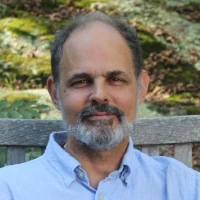
About Joseph A. Polizzi, Ph.D.: Joseph Polizzi is Associate Teaching Professor in the Department of Education Policy Studies at The Pennsylvania State University (Penn State) and Director of Penn State World Campus’ online Doctor of Education (D.Ed.) program. As Associate Teaching Professor, he is faculty for multiple programs offered by the Penn State College of Education, including the Education Theory and Policy MA, the Education Policy and Leadership Ph.D., and both the D.Ed and M.Ed. programs in Educational Leadership.
Dr. Polizzi’s role as Director of the D.Ed. program encompasses advising, overseeing admissions, coordinating the program’s Summer Summit, and developing student working groups, among other responsibilities. Prior to his time at Penn State, Dr. Polizzi was Associate Professor and Director of the principal preparation programs at Sacred Heart University. For much of his career in higher education, he was faculty at Marywood University, where he also worked as Program Director for the university’s certification programs in educational leadership.
Dr. Polizzi received a Society of Professors of Education (SPE) Book Award for his 2023 publication, Understanding Suffering in Schools: Shining a Light on the Dark Places of Education, coauthored with William C. Frick. He was also honored with the Don Walters Award at the 2017 New DEEL (Democratic Ethical Educational Leadership) conference and has participated in a Fulbright Teacher Exchange. Dr. Polizzi earned his Ph.D. in Educational Administration and Leadership from Penn State, his M.S. in Secondary Education from Hofstra University, and his B.A. in English from Le Moyne College.
Interview Questions
[OnlineEdDPrograms.com] May we have a brief description of your educational and professional background and your current position at Penn State?
[Dr. Joseph Polizzi] A big part of my work has always been centered around answering the question, “Who do I serve?” I started out my career as a New York State Senate Education Fellow. After receiving a master’s degree from Hofstra University, I spent two years in the New York State Senate working on education policy issues. Then, immediately after those two years, I came down and started working as a high school English teacher at a public school in New York City.
I started teaching at a longstanding alternative high school for at-risk students called Satellite Academy. I had an interest in small schools, and there were many small schools beginning to develop in New York at the time, so from there I worked at a number of high schools that were in start-up mode, building them from the ground up. During that time, I became interested in pursuing a Fulbright Award, which I received to participate in a teacher exchange with an educator from Hungary. The Hungarian teacher came and taught at my high school, the Cobble Hill School of American Studies, and I went abroad to the city of Pécs and was a high school teacher for a year there.
When I returned, after spending another year in New York, I moved to the city of State College, Pennsylvania, to pursue my Ph.D. in Educational Administration in the Department of Education Policy Studies at The Pennsylvania State University (Penn State). I spent five years there and conducted my graduate research on professional development in schools and transformative learning for pre-service and in-service teachers.
I graduated from Penn State with my Ph.D., and I began working in higher education. Although I am licensed as a school principal and superintendent, my work has predominantly been in higher education. I spent 11 years as a Professor of Educational Leadership at Marywood University, where I received tenure. Then I transitioned to Sacred Heart University, where I was a professor while also running a very large principal preparation program. But, in my heart, I had always wanted to be running a doctoral program.
After being at Sacred Heart University for five years, the opportunity to serve as Founding Director of the Penn State Doctor of Education (D.Ed.) program came across my desk. The D.Ed. program had been in the works at Penn State for quite a long time; it had been in development for almost 10 years when I arrived, from my understanding. I see myself as a steward to an excellent program that is going into its fourth year in the Fall of 2026.
One of the nice things about my career is that, in many ways, I have come full circle. I am back in the same department and college that I graduated from after being out in the field for quite a long time.
[OnlineEdDPrograms.com] Could you please provide an overview of Penn State World Campus’ online Doctor of Education (D.Ed.) program, including the program’s structure and curriculum content?
[Dr. Joseph Polizzi] The program requires a total of 37 credits. Of those 37 credits, 18 are EDUC courses, which are foundational courses specific to this program. There are also 12 required elective credits and six capstone credits, which is the research component of the program. There is also a five-day required summer summit on campus. We expect the program to take about three to four years to complete, with the possibility of an additional semester depending on the pace of the student’s work.
We require six core EDUC courses, worth three credits each. There is EDUC 801, which takes a global perspective on the culture of education. EDUC 802 is a foundational course in educational research, which provides an introduction to qualitative, quantitative, and mixed methods approaches to education research. 815 is our philosophy course, which addresses a wide spectrum of philosophical perspectives on education, from pragmatism to critical pedagogy. The three other required courses are a quantitative methodology course, a qualitative methodology course, and a course on program evaluation.
The D.Ed. is an “all-college” program, which means, for the 12 elective credits, students are able to take classes from across all of the departments in the College of Education, including Education Policy Studies; Curriculum and Instruction; Educational Psychology; Counseling and Special Education; and Learning and Performance Systems. We have about 175 courses spanning those departments in the World Campus catalog, and these include courses offered by our other graduate programs in Higher Education, Educational Leadership, Learning Design and Technology, Literacies and English Language Arts, and more.
Because of the all-college design of the program, we have the resources to support students in any professional background that matches the departmental specializations offered by the College of Education. In P-12 Education, we have students who are pre-K teachers. We have elementary school teachers, middle school teachers, and high school teachers. We have elementary principals. We have high school principals, as well as school district administrators, educators working in special education, behavior analysts, assistant superintendents, superintendents, curriculum writers, and more.
For higher education, we have students in student affairs and institutional research. We have people who work in residence life. We have people who are professors in different departments in the university that are taking classes in the program. We have folks specializing in learning and performance systems, learning design technology, and instructional design. We have students working in workforce education and in corporate HR, doing either professional development or human resources management. We have people in adult education and adult English as a second language education.
We are careful in our admissions process, though, to ensure a student’s interests and background match with a faculty member who can serve as their advisor for the program. Because we are fortunate to have over 200 faculty members in the College of Education involved with the D.Ed., we can support students with a wide array of career backgrounds. Even so, we make sure there is an advisor available whose expertise aligns with the student’s interests prior to accepting them into the program.
[OnlineEdDPrograms.com] Can you elaborate on how the D.Ed. curriculum emphasizes transformational leadership in its curriculum?
[Dr. Joseph Polizzi] We approach the course of the program from what I would say is a traditional educational approach to research and theory. We do that because we have students who are interested in qualitative research and students who are interested in quantitative research, and we want to supply all of our students with a strong methodological foundation.
I see the transformational component coming in the way we encourage students to pursue a problem of practice. Our students often enter the program already situated in high profile positions in their jobs. They come in with ideas of how they want to change their workplace, how they want to change the climate, how they want to change the culture, how they want to develop a curriculum, how they want to work with teachers, and so on.
Their problem of practice is where we see the most possibility for transformation. Students come in already knowing who they are, their identity, their history, and their professional role.Their ability to address a problem of practice, to enact transformation, comes from understanding who they serve. Who do they serve in their role? Is it immigrant students? Is it a corporate unit that they work with? Why do they serve this group? How do they want to change something for the better for this population?
For example, recently one of our students, who worked for a HBCU (Historically Black College and University), has begun looking at accessibility issues on websites that HBCUs offer. He has found significant accessibility issues in how websites are set up, which is causing students not to be able to get the information that they need from those websites. This graduate student very much knows who he serves. Transformation comes in through that problem of practice: through the student identifying who they are, who they serve, and how they want to change something for that population.
[OnlineEdDPrograms.com] Penn State World Campus’ D.Ed. program is primarily online, with one required, five-day “Summer Summit” held at the University Park Campus. Would you discuss the course delivery format and the online learning technologies employed by the program?
[Dr. Joseph Polizzi] Penn State World Campus has an online model across departments, which is online, asynchronous, and global. Programs in psychology, engineering, education, or other areas all use the same asynchronous, online format. Having worked in an asynchronous online program at Sacred Heart University, I know there are limits to this format. But there are several advantages. We have students in the World Campus D.Ed. program across 27 states, 14 countries, and at least four time zones. This allows us to meet the needs of that diverse pool of learners. Our students are also professionals, balancing their job, their family, and school.
We talk with our incoming students about managing this new responsibility and how they can be engaged with the program beyond its asynchronous requirements. Our students want to be engaged and have expressed a demand for more opportunities to do that. In light of that, we held a meeting with all the students in the program, where they invited their families and loved ones, and discussed with them what their parents and partners would be experiencing in the program.
We also have what I consider to be a very alive student biography page. For each class that comes in, we have their bios, a picture, what they are interested in, their email, and their LinkedIn. We encourage students to go in, read the other bios of students in the program, send them an email, have a coffee meeting with them, and to build small networks of students that they feel comfortable with. We have hosted “Lunch and Learns.” I run meetings with students throughout the semester where we watch videos related to the field.
We are also developing working groups around popular topics like artificial intelligence. We have a Health, Wellness, and Performance working group whose members include an athletic director, a black belt, a former professional football player, and an Orange Theory coach. I lead a Data Nerds working group for people that are inclined towards mathematics and quantitative statistics, as well.
These groups are slowly beginning to take form. Case in point, I gave the AI working group the charge to come up with a working policy on how AI is used in the D.Ed. program. I just met with them yesterday. We are hammering that out. We are going to institute that in the fall, and it will all be student-driven.
For those who want engagement, we find ways. We have a student support specialist. We find ways to connect students, and to communicate to students that they are not isolated. I am always thinking about connecting students with other students and faculty members. At the same time, some students are not interested in that level of engagement. They come in with really strong organizational and time management skills and progress independently, and we support that style of engagement as well.
[OnlineEdDPrograms.com] Would you provide us with more details about the structure of the Summer Summit and the opportunities for academic and professional development it provides for students?
[Dr. Joseph Polizzi] We are going into our third Summer Summit this year. This is a five-day, on-campus residency that is required for the program. 50 students attend the summit each year. It is held on campus in the Chambers building. We have a contract with the nearby The Nittany Lion Inn where students can stay, or they can opt to stay in the dormitories.
The Summer Summit is built around two different pillars. One of them is social: the students get to know each other. Finally, perhaps after a year, they are coming to campus and meeting other students that they have been in classes with. When that bubble pops, it is emotional. We host events for students throughout the week; we do a scavenger hunt, and this year we are hoping to take students to a baseball game.
Second, there is the program side. The summit runs Sunday through Friday. Sunday is all social. Monday is spent going over program milestones and talking a little bit about the history of the program. Tuesday is about research skills, including library skills, technology, ethical use of AI, and Institutional Review Board (IRB) applications. Wednesday, we host a Faculty Forum, where the keynote speaker tells the students about their particular research and the culture of academia. In past years, our speakers have been Pete Allison and Wilson Okello, both from departments within the College of Education, and we also hosted Jill Perry, who is a Professor at the University of Pittsburgh and Executive Director from the Carnegie Project on the Education Doctorate (CPED).
Thursday, we have what we call the Round Robin. Students come with their problem of practice and meet with different faculty members to get some feedback on their work. Finally, Friday is a reflective day spent wrapping up. We take a photo and have chances for students to connect.
It is an intense week, but we love the opportunity it provides students. They really connect with so many different aspects of the program. We make sure they connect with the campus. We make sure they connect with faculty and alumni. There are a lot of people who want to meet the students, and it offers a unique chance for the students to engage with the program.
For students seeking the real Penn State student experience, starting this year we have dorm rooms and campus meal plans available for students to stay in for the week. For those who want something a little more comfortable, we have blocked rooms at the hotel on campus, The Nittany Lion Inn.
[OnlineEdDPrograms.com] Penn State World Campus’ online D.Ed. program culminates in a Capstone Experience. Could you tell us more about the capstone requirement and problems of practice students explore through their capstone projects, with examples of current and/or recent student projects if possible?
[Dr. Joseph Polizzi] There are three milestones in the program. The first is qualifying, which comes early in the program at 12 to 18 credits. This is when students present the idea for their problem of practice. This is about 10 to 15 pages, and they receive feedback on their proposal. Then there is the comprehensive, which comes after students have completed about 28 credits in the program. That is a full-fledged proposal for their research study. Then there’s the capstone.
Currently, we have had one student complete their capstone, Dr. Amanda Peterson. Other students are working on capstones on topics such as hospitality in the middle school art room, assessment in higher education institutions, and community and social learning among ESL educators as it relates to their professional identities. Another student is doing a project on improving workplace diversity in academic libraries. Another is looking at the impact of culture on learning transfer within talent development in corporations.
Students are doing many different kinds of work. What exactly their capstone projects entail will evolve over time. The first ones are going to look a lot like a research-based doctoral dissertation. As the program grows, we want to increase our emphasis on students’ capstone projects engaging in transformative research. We talk frequently about what differentiates D.Ed., as a professional doctorate, from a Ph.D. The professional doctorate looks at changing something; it works to change the world for the better. We stress empathy, ethics, and equity as component parts of the capstone experience. We see that resounding in student work.
[OnlineEdDPrograms.com] Could you elaborate on the methodological approaches students use in their work?
[Dr. Joseph Polizzi] On one hand, we provide grounding in foundational, traditional, educational research methods. By the time they get out of the qualitative research course, students have several different methods that they can use to gather data. They have experience with a narrative interview. They have experience with a case study. They have experience with document analysis. They have experience with a visual approach to gathering data. They come out of the quantitative course with experience in statistical analysis. After the program evaluation course, students have tools for conducting program evaluations in educational and corporate settings.
We encourage students to select the best methodology for gathering data based on their problem of practice, whether that is qualitative, quantitative, a case study, a narrative study, or another approach. I also advise students to take the path of least resistance. Students often come in with grand ideas about using a methodology they have read about. But, when we think about their question, they can take a narrow methodological approach that is actually going to give them the exact data that they need to resolve the problem that they are looking at. At the same time, I have a student that is currently using a phenomenological approach tied to narrative interviews because it is the right method for the problem of practice he wants to address.
On the other hand, we are enabling faculty advisors and their committees to meet the needs of the student in their professional realm through the capstone, and want the exact product of the capstone to align with those needs. What exactly a capstone looks like will stem from the relationship between the student, their problem of practice, their committee, and their advisor. We are open to dynamic approaches to this as the program grows.
[OnlineEdDPrograms.com] What faculty advising and mentorship opportunities are available to students of Penn State World Campus’s online D.Ed. program?
[Dr. Joseph Polizzi] Advising is student-centered. I serve, along with a colleague, as an advisor to all the students when they initially enter the program. We do regular meetings with the students and give them the big picture: how the courses work, what courses to take first, what courses to take second, et cetera.
Further, every student is matched with a department advisor when they are admitted. Typically students do not begin to work with that advisor until they reach the qualifying stage of the program at 12 to 18 credits. At that time, they are introduced to their advisor, who then follows them through the milestones mentioned above: qualifying, comprehensive, and capstone.
The semester after a student goes through qualifying, they have to form a committee for their comprehensive. The committee is made up of two other faculty members, who they work with their advisor to identify. This will be their committee for both qualifying and the capstone. One of them is their chair and the other two serve primarily as readers.
No student is admitted if we cannot identify an advisor that could support that student’s work. As I mentioned, because this is an all-college program, applicants are reviewed for matches by two different departments, so we can match applicants from diverse backgrounds. Still, there is a significant vetting process, and we err on the side of admitting fewer students to make sure that all incoming students potentially have an advisor that matches the focus of their work.
[OnlineEdDPrograms.com] Do you have advice for prospective students who are interested in applying to Penn State World Campus’s online D.Ed. program that would help them optimize their application?
[Dr. Joseph Polizzi] The first application requirement is a three to five page short essay. Here, applicants should address some of the questions I already discussed as important to transformative work in education: Who are you? Who do you serve? How do you want to help the group you serve? They should also discuss why they view Penn State as an institution they can work with to meet those goals. The audience for the personal statement is the program faculty. Dot all your i’s, cross all your t’s, and use references if necessary. Tell your story as a professional who is going to make a difference in the lives of others.
When you are writing your personal essay, write it so that it is true and true to who you are. Make it meaningful. You want to write it in such a way that, if you get in, it opens doors for the work you will do at Penn State. If you happen to not get in, you still have located a truth about your work and career that will serve you. What you write can also be fine-tuned and used as an application to another school or to reapply the following cycle.
The second application requirement is a writing sample. We are interested in seeing a writing sample because students do a lot of writing and a lot of reading in the program. It could be a publication, an article that you wrote, or something that you used at work. It does not have to be published, but it should demonstrate your ability to write at the graduate level. The third thing is academic transcripts, which should speak for themselves.
Fourth, and equally as important, are references. Many applicants meet the requirements to come into the program and are even outstanding. What often puts somebody over the top are their recommendations. Did somebody get all their recommendations from the same place? That is not necessarily a problem. If someone is a K-12 teacher, and they have been a third grade teacher at an elementary school for 15 years, and they have a letter from their superintendent, their principal, and the school psychologist, then that is remarkable. But sometimes people are just asking for recommendations based on convenience, and they are not talking with their recommenders about their experience, what they want to do, or why they want to do it.
We have had people send in recommendations from their spouses, friends, or other personal relationships. Those are not the best people to choose for a reference, but you do want to choose people who know you. Select someone who is able to speak about your career trajectory, whether that is from your previous or current work place. Talk to that person about your goals for the program.
I have seen over 1,000 applications in the past three years. That is a lot of distilled information. People have to put their best foot forward and really think about the application. What is going to make you stand out?
[OnlineEdDPrograms.com] What distinguishes Penn State World Campus’s online D.Ed. program and makes it an exciting choice for prospective graduate students in educational leadership? How do you see the program developing over the coming years?
[Dr. Joseph Polizzi] Penn State is an amazing university. It is a Big Ten university. The resources go deep. The faculty here are world class. They know how to work with students and they love working with students. Being a Penn State alumni myself, as well as someone who had a career at a number of other universities, I can say that Penn State has provided me with a world class education and network.
That network is an important component of the Penn State World Campus D.Ed. program. With students in 27 states and 14 countries, our graduates will find alumni wherever they go. If they wear Penn State clothing out on any given day, someone is going to come up to them and say, “I have two words for you: ‘We Are.’” In return, they are going to say, “Penn State.” There are Penn State alumni in every city and town. That makes a big difference. There is a culture and a climate of being one.
As for the future of the program, we are currently planning our third Summer Summit. I also mentioned we are working on instituting an AI policy in the program that is student-centered and makes use of AI as a tool. I am thrilled to watch our first cohorts of students graduate in 2026 and 2027. From there on, our objective is to maintain the program at about 250 total students, with new graduates each spring and fall.
Thank you, Dr. Polizzi, for discussing Penn State World Campus’ Online D.Ed. program, its commitment to helping students address pressing problems of practice, and your work as Director with us!