

Interview with Kathleen Wallace, Ed.D., and Sara Connolly, Ph.D., about Sacred Heart University’s Online Ed.D. in Educational Leadership
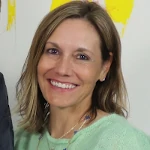
About Kathleen Wallace, Ed.D.: Kathleen Wallace is Program Director for Sacred Heart University’s Doctor of Education (Ed.D.) in Educational Leadership program, as well as Assistant Teaching Professor in the Department of Educational & Literacy Leadership. As part of her role as Program Director, Dr. Wallace also supervises the Ed.D.’s Social-Emotional and Academic Learning (SEAL) track. Dr. Wallace earned her Ed.D. in Educational Leadership and Administration from the University of Bridgeport, where she also worked as Assistant Professor before moving to Sacred Heart University. Prior to that, she held a number of educational and administrative roles in K-12 education.
Dr. Wallace’s scholarly work has appeared in publications including the American Journal of Education Research and Reviews and Teacher Development. Her current research includes studies oriented toward improving Sacred Heart University’s Ed.D. program. In 2027, Dr. Wallace will begin serving as Co-Editor in Chief of Impacting Education: Journal on Transforming Professional Practice, the academic journal of the Carnegie Project on the Education Doctorate (CPED).
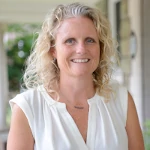 About Sara Connolly, Ph.D.: Sara Connolly is Associate Dean of Student Success for Sacred Heart University, where her work focuses on student retention and degree completion. She currently serves as Program Director for the Higher Education Leadership track of Sacred Heart University’s Ed.D. program in Educational Leadership, and has also served as Program Director of the M.A. program in Higher Education Leadership & Student Affairs. Before her time at Sacred Heart University, Dr. Connolly held the title of Associate Provost for the University of Bridgeport, and she has extensive experience working in student affairs and as an educator.
Dr. Connolly’s research focuses on student success and retention, and has been supported by grants from the National Orientation Directors Association and the ACPA (American College Personnel Association – College Student Educators International). Her publications have appeared in periodicals such as College Student Journal and American Journal of Distance Education. Dr. Connolly earned her Ph.D. from The State University of New York (SUNY) at Buffalo, where she also received her M.Ed. in Student Counseling and Personnel Services.
Interview Questions
[OnlineEdDPrograms.com] Dr. Wallace, may we begin with an overview of your academic and professional background? What are some of your goals as Program Director for Sacred Heart University’s online Ed.D. in Educational Leadership program?
[Dr. Kat Wallace] Higher education has been my second profession in some ways. I spent 20 years in K-12 education. I started out as a secondary English teacher, before becoming a reading specialist. Then I was a literacy coach for a time. During my last eight years in K-12, I served as principal at an Intermediate (grades 4 – 6) school in Pennsylvania.
I moved to Connecticut after that. I was working on my doctorate and adjuncting at the University of Bridgeport, and I also worked as an adjunct at Norwalk Community College teaching developmental writing. When I graduated, I took on a role at the University of Bridgeport as the Director of Elementary Education for Teacher Preparation. In addition to teacher education, I also had the opportunity to teach in the doctoral program and chair dissertations.
From there, I transitioned to Sacred Heart University. I started out teaching in the Department of Educational & Literacy Leadership within the 092 and Sixth Year program, which certifies educators to become school administrators. The opportunity to move into the role of Ed.D. Program Director came up, and it was right in my wheelhouse. This is my second year as Program Director. It has been fabulous. I teach foundations of social-emotional learning and in the dissertation seminar courses, and I love working with our doctoral students. The most exciting part is watching students come in with an idea of what they want to work on and facilitating as they plan, research, and create a finished product. I love seeing how proud they are of their amazing work as they walk across the stage at commencement. It is an amazing thing to be a part of.
When it comes to goals for the Ed.D. program, I think the role of an educational leader has changed over time. Previously, people in this position were essentially managers, implementing what they were told to implement. I think that has changed over the past several decades. Partly because of our increasingly diverse classrooms, we expect our leaders to be transformative: to change the educational space and to work toward equity for all students that are coming into that space. A lot more is expected of our leaders now.
One of my goals is to continue to make our program coursework and the Dissertation in Practice [discussed in detail below] meet the needs of our students and give them the skills to become transformative leaders. I think our Ed.D. program is accomplishing that. We are constantly revising the content and course offerings of our curriculum to be more timely and geared toward the creation of transformative leaders.
Another thing I have been focused on is building community and engaging with our alumni. Building a scholarly network that our students can rely on, tap into, and seek feedback from when they work through critical, complex problems of practice is incredibly beneficial. We have brought in alumni to meet with our students. We also work to support our students in attending conferences, like those hosted by the American Association of Colleges for Teacher Education (AACTE) and the Carnegie Project on the Education Doctorate (CPED, discussed in detail below). By helping students build these professional networks, we can give them the resources to continue to be impactful as scholarly practitioners after they complete their degrees.
[OnlineEdDPrograms.com] Dr. Connolly, would you provide us with an overview of your own academic and professional background? What are some of your goals as Program Director for the Higher Education and Leadership track of the online Ed.D. in Educational Leadership program?
[Dr. Sara Connolly] I have spent my career in higher education. I started working with fraternities and sororities in very traditional student affairs roles. My early career was spent working on student orientation and first year experience programming. Later, I held the role of Dean of Students. Then, a little over 20 years ago, I made the leap to a full-time faculty role.
My first faculty role was in an online program that I also helped build. After that, I moved to the University of Bridgeport, which is just down the street from Sacred Heart. There, I was a faculty member, and served in leadership positions like Department Chair and Program Director. For about 15 years, I ran the Master’s in Higher Education program at the University of Bridgeport, which was based in a counseling department and focused on counseling.
My research area is focused on how and why students succeed. When that is your area of research, universities pull you into leadership conversations all the time. I was invited by the president to work in an administrative role as Associate Provost working on student success. I did that for a couple of years before the pandemic upended the world.
I then decided to come here to Sacred Heart University, and my current role is Associate Dean for Student Success. That is one of the hats that I wear. We created the Master’s in Higher Education & Student Affairs first, and then we created this second track in the Ed.D. program that is specifically for higher education leadership. I currently serve as Program Director for the Higher Education Leadership track.
My academic background has taught me that there are certain pillars of our work in education that will always be things that students need to learn. Those will always be the cornerstones of what we teach in a doctoral program that helps graduate students become senior leaders at an institution. There needs to be a course on finance and higher education. There needs to be an organization and governance course. We need to cover those things, but other things ebb and flow. Legal and ethical issues are important topics right now for obvious reasons. We are not lawyers, but we teach our students the law that applies to them.
You cannot upend your curriculum all the time, though. To respond to this, one of the great things that we do at Sacred Heart, which Kat has been the leader on, is the residency program that we offer every summer. This allows us to add-on to what our students get in their curriculum throughout the year. We have three days every summer to teach them extra information.
The other piece that makes the program unique, and which I saw as a necessity when we were creating the program, is that our higher education leadership graduate students take a course on the science of teaching and learning in higher education. Many of our students want to be full-time administrators: deans of students, vice presidents of student affairs, or leaders of their departments in some way. Almost everybody also wants to be an adjunct professor. However, it is no secret that, in academia, we often do not teach people how to teach. We saw an opportunity to embed that in our curriculum, and decided to offer a course on the science of teaching and learning.
[OnlineEdDPrograms.com] Dr. Wallace, Would you please introduce us to the Ed.D. program in Educational Leadership and its Social-Emotional and Academic Learning (SEAL) track? What sort of professional roles is the SEAL track designed to prepare students to work in?
[Dr. Kat Wallace] The Ed.D. is structured as one program with different possible tracks. The SEAL track is the original track of the program and is focused on social-emotional learning and trauma responsive practices. We just added the higher education leadership track, and we are also working on a third track for K-12 leaders specifically. Each track has a 15-credit specialization. 37 credits are common between the tracks, including foundational research courses like quantitative, qualitative, and mixed methods.
We also have shared courses on grant writing and policy, and we are currently adding a new class on foundational leadership in P-16. Shared courses also mean students in these tracks benefit from meeting and learning from one another, and from their different backgrounds and experiences. They learn about different problems of practice across programs and across higher ed, P-12, SEAL, and educational leadership.
The folks who enter the SEAL track do not always have a background in social and emotional learning (SEL), but they have to have an interest in it. Historically, our students have been classroom teachers, school counselors, school psychologists: people who are working with students and adults in schools who might be struggling to make connections or relationships, to manage emotions, to self-regulate. It is important for them to learn how to model SEL skills and strategies to colleagues and students. Our students understand that you cannot separate academic success from personal well-being and SEL. SEL is the foundation on which all these other skills are built.
As a student, you cannot succeed as well as you could without this foundation of self-regulation and social-emotional learning. You cannot be a good leader or a good teacher without engaging in healthy SEL practices. I think that is the most important part of our program. We are the only university in the country that offers a concentration in SEL at the doctoral level.
I think what makes us distinct from other Ed.D. programs is that we very intentionally connect SEL and educational equity to practice. This is not a theoretical program. One way I look at it is that, when you go into a Ph.D. program, it is about understanding the world, whereas when you go into an Ed.D. program, it is about changing or transforming the world. Our program is authentic and applied. We are looking at real-world problems, and we are giving students the skills to go out there to attack issues in education through this lens of SEL and equity. We challenge students to come up with ideas for solutions in order to create systemic change. We are doing the work. We are building a bridge between theory and practice.
Our students learn skills that are transferable to a wide variety of contexts. For example, the signature methodological framework of our Dissertation in Practice is improvement science. You learn a research cycle, where you plan, do, study, then act (PDSA). With that skillset, you can be a classroom teacher and implement change in your classroom. You can be a school leader or a district leader and know how to attack problems from that lens.
We also have students who are in the private sector and work at places like Sandy Hook Promise [a gun violence and school shooting prevention nonprofit]. I had a conversation with a student in admissions the other night who had a background in editing, and I asked where she wanted to end up with this degree. She said she wanted to gather this SEL skillset, so she could better relate to people, understand their perspectives, and take that to the private sector and start her own business. I think Sacred Heart’s Ed.D. program makes you marketable across programs, districts, and states.
[OnlineEdDPrograms.com] How does the SEAL curriculum reflect the Ed.D. program’s commitments to social justice?
[Dr. Kat Wallace] The SEAL lens is how social justice shows up in practice. They are not separate ideas. We ask our students in the program to look at the negative student experiences and negative student outcomes that are occurring because of adult actions in the educational space. When we look at topics like chronic absences for students or why multilingual learners are not performing at the same level as their Engish-speaking peers, we question the actions and behaviors of educators and leaders that produce these inequities. We focus on how the adults in these contexts can help address these dynamics.
In their dissertations, our students work primarily with adults because we recognize that you are not going to change or “fix” student behavior if the adults in the room are not regulated and do not have the understanding or foundation to affect change in their classrooms or buildings. We examine the student experience, we look at these negative outcomes, and then, using improvement science methods, we identify viable change ideas that could be impactful in that setting.
We require our Dissertations in Practice to be grounded in SEL and most also have a social justice component because these ideas go hand-in-hand, they are not separate. When we examine why students are having different difficulties, we ask about adult mindsets that are limiting what is happening in the classroom, and the systems that, for example, are designed to lead students of color to be excluded from schools via discipline more frequently than their white peers. We look at how students are affected by inequities through an SEL lens and ask what kind of socially just implementation we can design to create a more balanced, equitable outcome for everyone.
[OnlineEdDPrograms.com] Dr. Connolly, would you discuss the Higher Education Leadership track of the Ed.D. program and the type of professional roles in educational leadership it is designed to prepare students to work in?
[Dr. Sara Connolly] Kat did a nice job of talking about how this is really one program with different tracks. Much of what our students do, they do together. I also want to echo that the Dissertation in Practice is one of our core principles of the program as a whole, and of the Higher Education Leadership track in particular. We stress this to our prospective students. You should choose a school based on the kind of dissertation you want to pursue. A Dissertation in Practice is a very different thing from a traditional Ed.D. dissertation, where you spend most of your time in the library and do something much more theoretical. I think what Kat said is true: that we are interested in creating change.
In the Higher Education Leadership track, we envisioned that the program would draw interest from leaders within higher education: people who were in the middle of their careers and seeking to advance to become senior leaders. That is true for some of the students. At the same time, we are also attracting students with broader backgrounds than I anticipated. Some of them are faculty teaching in their respective fields who want to have a higher education background. Some are librarians. I think we are seeing a broad scope of students because, no matter what your exact role is, working in higher education makes you want to better understand the system that you are working in.
[OnlineEdDPrograms.com] Would you discuss how the Higher Education Leadership program’s curriculum reflects the Ed.D. program’s commitment to social justice and equity?
[Dr. Sara Connolly] Given that the mission of Sacred Heart University is rooted in social justice, we could not have a Higher Education program without a focus on social justice. Higher education, if done well, is social justice. It is about creating equity in the world and opportunities for all.
For our program, that means we do not have one class on social justice and leave it there. Social justice, equity, access, and related principles are woven through the curriculum. For example, when we talk about financial aid or finances in higher education, we are talking about how the cost of college impacts equity and social justice issues. We think about how this concretely impacts the college finances of students, which is an equity issue as well.
[OnlineEdDPrograms.com] Sacred Heart University’s Ed.D. Program is a member of the Carnegie Project on the Education Doctorate (CPED). Would you discuss how CPED informs the design of the program’s curriculum and how adopting this framework is beneficial for educational leadership graduate students?
[Dr. Kat Wallace] Being a member of the Carnegie Project on the Education Doctorate (CPED) has really shaped how we think about the Ed.D. Our program is designed around the six CPED principles, which highlight equity, ethics, social justice, and the creation, generation, and transformation of learning. Sacred Heart University’s Ed.D. is not a traditional academic degree. It is preparation for leadership in action. Our students’ dissertations are built around a problem of practice, critical inquiry, and continuous improvement. Research is not just time in the library reading theory in isolation.
CPED has an amazing annual learning exchange that our students, faculty, and alumni attend. It is a great opportunity to showcase faculty research and the dissertation work that students are doing. The format of the conference involves workshopping with other professionals in CPED, some of whom are faculty and program directors, who can help one another solve problems. It provides a forum for us to explore how to design our program curriculum.
I have presented research with different colleagues on issues we are navigating in the program. For example, for an Ed.D. the curriculum for a quantitative methods course should be different than it would be for a Ph.D. Educational leaders who are generally not doing complex quantitative analysis in SPSS. They are working with real people and doing interviews and surveys, so they are more often looking at descriptive statistics.
CPED gives us a window into how other institutions navigate similar challenges to our own. Many other institutions offering online programs, for example, are facing the problem of how to incentivize students to come to their in-person residencies. Our program serves everybody across the country. It is a national program because we are asynchronous. Having people fly in and stay over multiple days costs money. How is it done?
Presenting at these learning exchanges and having the opportunity to get information back has been incredible in the time that I have been program director. It helps me learn how we can do it better. CPED also offers a program review model: they will come and work with you to look at how your program’s learning outcomes are aligned to their principles.
I am currently doing a project with Jill Perry, who is the director of CPED, another CPED colleague, and two researchers from Dublin City University in Ireland. We are doing a collective study looking at the graduates of our four separate, CPED-influenced institutions and exploring how they embody the mindset and skillset of the scholarly practitioner after they leave our programs. It is very interesting to see what this looks like in Ireland compared to institutions in Connecticut, Pittsburgh, and North Dakota. Without CPED, I would not be doing that work. It opens the doors to look at equity on a broader level, not just what it looks like at Sacred Heart. How could these programs pursue universal equity by adapting to their specific contexts? Doing that work together makes it a lighter lift.
[OnlineEdDPrograms.com] Dr. Connolly, would you like to add anything about the Ed.D. program’s affiliation with CPED?
[Dr. Sara Connolly] I will add just two short things. First, because our students are undertaking a Dissertation in Practice, they are doing field work. Field-based research is very difficult to conduct without establishing connections with other practitioners. CPED allows people working in the field to connect and offer perspectives to one another, and that is really valuable.
I would also add that Sacred Heart University has come out as a leader in the CPED community, partly thanks to Kat’s work. We had a student, Dr. Jennifer Riggle, who won CPED’s Dissertation of the Year award last year. Kat and our Department Chair were just named the new editors for CPED’s academic journal, Impacting Education: Journal on Transforming Professional Practice. For the next three years, that will live at Sacred Heart.
[Dr. Kat Wallace] Thank you, Sara. Yes, currently, the journal is based at the University of South Carolina. We are meeting with them next week. They are going to work with us through the spring and summer to go through the process of putting out the journal, which will be like an apprenticeship. Then, next spring, we will fully take over responsibility for the publication. It should be a great opportunity for our students, for our faculty, and for the program. I hope to help the journal grow, and that also helps elevate the reputation of Sacred Heart’s Ed.D. program and get our name out there.
[OnlineEdDPrograms.com] As we have discussed, both tracks of the Ed.D. program require students to complete a Dissertation in Practice as their culminating experience. Would you elaborate on what is required from students in the dissertation research process?
[Dr. Kat Wallace] The way that the dissertation works is that, after their first year of coursework, students begin taking dissertation seminars. We have four seminars and they are called Dissertation I, II, III, and IV. Very creative [laughs].
In the first seminar, students explore what the problem of practice of their dissertation might be. As Sara mentioned, everyone has to be exploring this problem of practice in their chosen context, which can be a higher education or K-12 setting, or a Department of Education agency, or in a nonprofit like Sandy Hook Promise, which I mentioned before.The important thing is you have to have access to educators who are working with students, which can come in a lot of different ways, and you have access to their site across three years.
Students start with their problem of practice: for example, that students of color are excluded from the classroom more frequently than their white peers, which creates serious, long-term inequities in their educational experience. In the first seminar, the student will engage in improvement science to examine the problem. As I mentioned, improvement science is our signature methodology. Part of that methodology is doing a root cause analysis and conducting empathy interviews with people close to the problem.
You talk to the teachers who are in these classrooms, and you ask them, “How do you deal with student discipline? What sort of student behaviors cause you to send a student to the office?” You get to know the problem from the adult perspective. We already know the negative student outcomes, so we want to understand why the adults are acting in this fashion. You might also look at school policies that potentially contribute to the problem, like zero tolerance policies.
Next, you come up with some viable change ideas: maybe three or four ideas you think could help address the problem. From there, you develop your theory of action. This takes place in Seminar II, where students design their studies and interventions and decide what type of data they plan to analyze. Then they go through the IRB process. By the time they get to Dissertation Seminar III and IV, they are implementing their change idea. They select one idea for the dissertation. Improvement science typically has multiple PDSA (Plan, Do, Study, Act) cycles, and they are meant to be short iterative cycles testing different interventions. For their Dissertations in Practice, students are looking at just one, and measuring whether the change idea is effective or impactful.
One of the goals of the program is that, after students graduate they will continue to conduct more cycles of PDSA research related to their problems of practice as they work as scholarly practitioners in the field. That might mean tweaking that idea based on what they learned in future iterations of their research. Or, if that change idea was a complete wash, they can try one of the other ideas that they generated from their research, the interviews they conducted, and the other discussions they had with people in the field.
[OnlineEdDPrograms.com] Are there recent student dissertations you would like to highlight?
[Dr. Kat Wallace] As Sara mentioned, Jenny Riggle’s dissertation, “Building Collective Teacher Efficacy for Student Engagement: A Rural School-based Approach to Mental Health Promotion,” won CPED’s Dissertation in Practice of the Year award. Another example of a recent student dissertation is by Vae L. Champagne. Her title was, “Trust Brokers and Connectors: Cultivation of Trust and the Trusted Adult in High School.”
Her question was, who can a student talk to when they are experiencing distress. Whether that is bullying or thoughts of self-harm, or they are concerned another student might harm themselves or others, who can they go to in their school to talk to about that? How do students identify a trusted adult? What does that look like? How do you become a trusted adult? What are the characteristics?
She conducted interviews and discovered that there were many trusted adults who did not realize they were perceived that way by students. The product was a profile of what a trusted adult looks like in a school. Based on that, her research suggested ways we can educate students on how to go about finding these trusted adults, so they are not carrying the weight of deciding who they can trust alone.
[OnlineEdDPrograms.com] Dr. Connolly, is there anything you would like to add that is unique about the dissertation process in the Higher Education Leadership track, or examples of student research you would like to share?
[Dr. Sara Connolly] One of the biggest differences between dissertation research in the programs is that, in higher education, you can work directly with the student population because they are adults. That means students’ change ideas do not always have to be making an impact on the adult educator in the room because the student is an adult too.
Because the Higher Education Leadership track was only recently founded, our students have not yet completed dissertation research. But a possible problem of practice might concern student retention and, more specifically, that students on academic probation often do not make it to the next semester. The student would then work from a review of the existing literature in their field and their primary research to design and implement a changed-based solution and determine whether their solution was impactful.
I want to reiterate that we do not want that to be the last step of the research process. As scholarly practitioners, we hope students will go back into their fields as newly minted doctors and continue to build on the change ideas they generated while writing their dissertations.
[OnlineEdDPrograms.com] Will you discuss the faculty mentorship opportunities available to students of Sacred Heart University’s Ed.D. program?
[Dr. Sara Connolly] Our students are assigned a more traditional advisor when they come into the program. It could be any faculty member in the department who works with doctoral students. Then, once they start dissertation study, they are assigned to their dissertation advisor, who will chair their dissertation.
The faculty assigns students their thesis advisors based on the student’s topic. Students are allowed to select their second reader. We give them a pamphlet of information on the faculty and their expertise areas, and they can select from the second reader from that group.
[Dr. Kat Wallace] Students also select a third reader who is active in their professional setting in some way and has a terminal degree. The idea there is that they have someone who can provide a unique entryway into their problem of practice and change ideas: someone with inside information in the context where they are doing research.
[Dr. Sara Connolly] Students receive lots of support. We have never had a student who completed coursework and began their dissertation, or became ABD (All But Dissertation), not graduate. That is a common problem. We do not have that problem. I strongly believe that is because of the advising and support model here. Once students move into their dissertation research, they meet weekly with their cohort as a group and also meet with their individual advisor.
One unique thing we just began doing is a group advising session for students each semester. We do it to build community and to give them more information. Last semester we did a group advising session on imposter syndrome. This semester we did group advising on academic burnout.
I am sure these things contribute to student retention. People are supported the whole way through. Because of these support structures, students make personal connections with their cohort outside of just showing up and doing the work and having class together. I have conducted a study on this, and students talk about the impact of the cohort model and how fabulous that is as a way to bounce ideas off one another, network, and build friendships. Students have group chats on the side, and these networks are continuing after graduation as well.
[OnlineEdDPrograms.com] Would you please discuss the online learning experience and delivery format of Sacred Heart University’s Ed.D. in Educational Leadership program?
[Dr. Kat Wallace] Prior to the dissertation, the coursework is delivered asynchronously. Within that, there are opportunities for students to collaborate on group work and participate in discussion boards. There are times where they are meeting together synchronously during the asynchronous courses and getting to know each other in that way.
All of our faculty also offer optional synchronous check-ins. For example, for one course that I teach I have an hour of office hours every two weeks. I might dedicate the hour to a specific topic, or it might be an opportunity to connect with students about their daily lives. Within the asynchronous model, there are these personal touch points, which is nice for those who choose to take advantage of them. Some students cannot because of their schedules, and that does not penalize them in any way.
Then, when we get to the dissertation phase, course delivery becomes synchronous like Sara mentioned. The whole cohort is meeting together and walking through these parts of the dissertation together, which is a very important piece of the program design.
[OnlineEdDPrograms.com] Would you elaborate on the in-person residency and the opportunities it offers to students?
[Dr. Kat Wallace] We cannot require students to come to residency, but we strongly encourage them to do so. Most students do come, because they really want to be there. They want to spend time with their cohort, and they want to see their faculty in person. Some parts of the residency have remained the same since we started the program. We still work to bring in outside experts in the field so that students can learn from faculty beyond Sacred Heart, and we have brought in leading scholars on SEL from institutions like Yale and CASEL (the Collaborative for Academic, Social, and Emotional Learning, an educational nonprofit focused on social and emotional learning).
The residency has also evolved over the years. It used to have a set curriculum, and there were fewer opportunities for exchange between the cohorts. Two years ago, I began conducting a survey where I would ask students what they wanted to see from the residency and what would be most useful to them. That informs our model now. We are planning the curriculum so each cohort gets what they need based on where they are in the program and in their dissertation work.
For the students who are about to defend their dissertations, the residency is essentially a writing retreat, with the option to attend the events and presentations attended by the lower cohorts. For first-year cohorts, some of the feedback was that students wanted to know more about the dissertation process before it is upon them. In response, we developed an overview of how to determine a problem of practice, as well as a broader overview of the dissertation process that we offer to students during residency. Upper level students also get the chance to practice defending their dissertation proposals, and the lower cohorts have the chance to learn from watching that.
We are also going to be having some alumni back at this residency, which is exciting. They are going to be holding a panel to discuss what comes after graduation. Some of our current students will be the facilitators of the panel and ask questions. They will discuss topics like, “What do I do with my Ed.D.?” and “How am I working as a scholarly practitioner in my current career?”
Last year, we started a research symposium as part of the residency, and we have invited current students and alumni to present a poster on their dissertation work or other scholarly work they have done since they have graduated. We had a keynote speaker from The Urban Assembly, David Adams, who spoke to our students and inspired them. Jennifer Riggle, the alumni we mentioned before who won CPED’s Dissertation of the Year award, is doing the keynote at our research symposium during this summer’s residency.
All of this is geared toward helping our students and alumni embody the identity of a scholarly practitioner and build a community that will help sustain their transformative work.
[OnlineEdDPrograms.com] Do you have advice for prospective students who are interested in applying to Sacred Heart University’s Ed.D. in Educational Leadership Program that would help them optimize their applications for the program’s unique tracks?
[Dr. Sara Connolly] I think it makes a difference when students are able to talk about what they are doing in higher education and how this degree will help them do that. How will what they will learn through doing the doctorate help them in their personal career goals? That is what I want to see.
[Dr. Kat Wallace] I would echo that. It is about knowing your goals and what you want to do with your degree afterward. I do not necessarily need you to come into the SEAL track knowing all about social and emotional learning. That is what you are coming to learn. Students do not need a background in SEL.
What they need is a curiosity and a commitment to the program. It is going to be three years. You take the courses in sequence. You do not piecemeal it. You have to be committed. You get on this train and you take it to the last stop. It helps when students communicate they are ready to commit to that and that they know what they want to do with it.
[OnlineEdDPrograms.com] What makes Sacred Heart University’s online Ed.D. program a unique and exciting choice for prospective graduate students? Is there anything that makes the SEAL and Higher Education Leadership track distinct from one another that we have not discussed yet?
[Dr. Sara Connolly] Because they are tracks within the same Ed.D., there are a lot of similarities, and we are proud of that shared core curriculum. In the Higher Education Leadership track, those 15 credits work, together with the Dissertation in Practice, to create higher education leaders. Students leave the program as experts in higher education. The students in the SEAL track are becoming experts in their area, too, which is focused on K-12 education.
I believe three things I touched on previously make Sacred Heart University unique. First is its focus on social justice, which is reflected in the Higher Education Leadership track. Second, we created a very specific course on the science of teaching and learning. Third, is that we follow the CPED model for the Dissertation in Practice more rigorously than some other institutions. We take the signature framework of improvement science seriously, and are invested in producing scholarly practitioners who go on to make a difference in their fields.
[Dr. Kat Wallace] Importantly, we are not a diploma mill. We are selective of the students we admit, because we want to make sure that our program fits their needs. I am open with prospective students about how I see their fit with our program. Students entering the SEAL track should have a real interest in social and emotional learning and working to make change in their settings. I might suggest to students that they consider the Higher Education Leadership track instead, or wait for the P-12 track we are creating.
If you want to be a curriculum writer, the program is likely not a good fit for you, and I will be honest with students about that. We are intentional on the front-end about who we accept, and we make the applied nature of the Dissertation in Practice clear to students. If you want to go and do something theoretical, this is not the program for you. We do not want you surprised after a year in the program. I think that sets us apart because there are a lot of universities who would say, we want your money and we will provide you a degree.
Our graduates do not just leave with a degree. They leave with a skillset and a new way of thinking about transformative leadership. I have interviewed graduate students after they have left. They report feeling like their degrees prepared them to make an impact because of their skills and the people they know. They feel confident, proud, and like that they have expertise in their field. They have reported back on amazing things that they are doing in their careers. It is just incredible to see.
Thank you, Dr. Wallace and Dr. Connolly, for taking the time to discuss Sacred Heart University’s Ed.D. in Educational Leadership program with us.