

Interview with Keonya Booker, Ph.D., about the College of Charleston's Online Doctor of Education (Ed.D.) in Learning & Inquiry in Practice Program
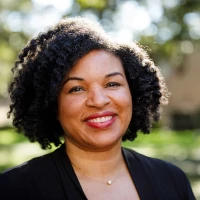
About Keonya Booker, Ph.D.: Keonya Booker is Director of the Ed.D. in Learning & Inquiry in Practice program at the College of Charleston where she is also Full Professor in the School of Education. Her role in the Ed.D. program encompasses teaching, advising students, overseeing the program’s curriculum and design, and more. Prior to taking on her current roles, Dr. Booker worked as Associate Dean and Interim Dean of the Graduate School. This experience gave her unique insight into understanding “how graduate students feel” and how to design the Ed.D. program “with the working professional in mind.”
Dr. Booker is also an accomplished scholar whose research focuses on educational psychology and school belonging. Her work has appeared in publications including The Journal of Faculty Development, Teachers and Teaching: Theory and Practice, InSight: A Journal of Scholarly Teaching, The Urban Review, and more. Dr. Booker holds her Ph.D. in Education with a concentration in Educational Psychology, Measurement, and Evaluation from The University of North Carolina at Chapel Hill. She earned her M.Ed. in School Psychology and her B.A. in Psychology from the College of William & Mary.
Interview Questions
[OnlineEdDPrograms.com] May we have a brief description of your educational and professional background and your current positions at the College of Charleston?
[Dr. Keonya Booker] I am a Full Professor of Educational Psychology at the College of Charleston, and I have been a faculty member in our School of Education since 2013. Previously, I worked in our Graduate School as Associate Dean for two-and-a-half years, and then I was the Interim Dean of the Graduate School for one year. After that, I returned to the School of Education to run our new Ed.D. in Learning & Inquiry in Practice program.
We launched in June of 2025, so the program is very new. The College of Charleston just recently began offering doctoral programs. Currently, there is a Ph.D. in Mathematics with Computation program, an Executive Doctor of Business Administration program, and the Ed.D. in Learning & Inquiry in Practice program. The Ed.D. program is by far the largest one. We just started our second cohort of students in 2026, and, in 2027, our first cohort of students will be in their dissertation year.
[OnlineEdDPrograms.com] How has your experience as Associate Dean of the Graduate School at the College of Charleston shaped your approach as Director?
[Dr. Keonya Booker] Working in the Graduate School has given me a different viewpoint on how our students feel. In the Graduate School, I learned a great deal about the developmental needs of graduate students, which, as you can imagine, are very different from undergraduates’ needs. Undergraduates are here. They are local. They are on campus. Traditional undergraduate students are 18 to 22 years old.
Graduate students have to juggle not only what they are doing in the program but also responsibilities like caring for aging parents or children, or working full-time in P-12 or post-secondary spaces. It was very important that we designed this degree with the working professional in mind, and I think my time working in the Graduate School really helped me be mindful of what that entailed as we built the program.
[OnlineEdDPrograms.com] Could you please provide an overview of the College of Charleston’s online Doctor of Education (Ed.D.) program, including the program’s structure and the professional roles in education the program is designed to prepare students for?
[Dr. Keonya Booker] The Ed.D. is a 60 credit-hour program. It is completed across three years, and we allow students to transfer some credits from their master’s degrees. We encourage students to go full-time. There is a part-time path students can pursue, but in admissions we normally give preference to applicants who want to enroll full-time. The program is in session year round for those three years, and is structured so students take two courses in the summer and one course at a time during the fall and the spring. All students start the program in the summer with the required campus residency.
The title of the program is Learning & Inquiry in Practice. This is a very broad degree. We welcome students from the P-12 space as well as higher education. We also have students from medical centers, local government agencies, nonprofits, and community organizations. When I do information sessions, I always tell prospective students that if they want to be a principal or a superintendent, then this is not the right program for them. We are not certifying or licensing anyone. That is very important for your readers to know, as well.
We find that students get to a certain point in their careers where they reach the limit of how far they can progress. They need this extra credential either to advance in their current careers or to pivot in a different direction. The Ed.D. will help them do that. With that in mind, the program requires students to have a master’s degree, but that degree does not have to be in education. Some students have M.Ed. (Master of Education) or MAT (Master of Arts in Teaching) degrees, but we also have folks in our program with MBAs, MFAs, or MAs in fields like English or communication. Because the degree is broad, we can recruit a wide range of students.
For students working in post-secondary education, the program might prepare them to be a director, an assistant director, or a vice president of a particular unit in their institution. For P-12 candidates, while you cannot be a principal or superintendent with our degree, you could be an instructional leader. You could be a department chair at a high school, for example, in science, mathematics, or social studies. Because the program is so new, we do not have definitive data on what positions alumni are working in, but these are the roles we had in mind when building the program.
These types of positions lend themselves to people who are skilled leaders and good consumers of research, which are aptitudes we try to cultivate in the program. We have a research core in our program, which is 12 credit hours. It is made up of four classes students take during their first year: Educational Research, Qualitative Methods, Quantitative Methods, and Program Evaluation. These courses are designed to ground our students. We talk about how you become a good consumer of research and read research articles with a keen eye to methodology. Professional roles in education like instructional leader, team leader, director, and vice president all require people who can take data, make sense of it, and make it meaningful to the different stakeholders involved, whether they are educators on the front lines or senior leadership. We are training our students to bridge that gap.
Everyone on the faculty is an active researcher in their field. We are going to conferences, writing papers, and getting grants. That functions as natural professional development, which lends itself to teaching courses and mentoring students. I was just talking to my Dean today about taking some of my second-year students to a conference I am attending. They are going to present a proposal they wrote in a research course. My own investment in going to this conference and professional development trickles down to what I want my students to be able to do.
This is an opportunity to demonstrate that they are not just taking this course randomly, or for abstract reasons. Instead, you take this course, you learn the methodology, you learn the skillset, and then you can apply to go to a conference where you present on a panel or do a roundtable, or you can use that as a starting place to write an article. We are trying to make the curriculum as integrated as possible so students do not feel like they are learning disparate things without understanding their value. There is a method to our madness. We are trying to put all this together to better prepare our students for the job market.
[OnlineEdDPrograms.com] As you mentioned, students are admitted in cohorts and begin each year of the program with a required summer residency. Would you provide us with more details about the summer residency requirement, and the benefits of the cohort model for graduate students?
[Dr. Keonya Booker] Each summer, students are required to attend a four-day residency. The residency is really about connecting, which goes hand-in-hand with the cohort model. Even though we are primarily online and asynchronous, students come here for four days every year. We get to know them, and they get to know one another. I think that is a very important consideration for our program.
I have talked to some of our students who have said, “I did an online master’s program, and I didn’t see my classmates or my professors in person until graduation day.” I could not imagine going through an intense, rigorous program and having to rely on people that you have never met or seen except for on a discussion board. I wanted to make sure that every single year we saw our students, and they saw one another, and that we built a sense of community from that experience. I want students to feel pulled in, like they are one of us, like we are all in this together.
From the beginning of designing the program, I looked at the research on cohort models. When folks come into an event or experience together and stay with one another through the event, this builds a sense of belonging, a sense of psychological membership, and a feeling of being connected to the institution, all of which grow over time. Students have expressed to me that they feel connected to other students through the group chats they started at residency. I love hearing that.
My research background is in school belonging. I am invested in building learning environments where students feel connected, not just to their instructors, but to one another. As much as I want them to feel like they can ask me for help, students may feel more comfortable asking each other. If I have not built a space for them to be able to do that, it is unlikely they will. Without that support, some may leave the program. For us, a cohort model and the summer residencies were important to cultivate that sense of support.
Each year’s residency has its own theme. The theme for the first year is Connect. That is a more traditional orientation. We introduce students to the library, the writing lab, and career services. Faculty come and eat lunch with them. Then, we start getting students thinking about their problems of practice for their dissertations. I tell them, “This will change a few times before it is all done, but I cannot let you leave after four days and not at least have this on your mind.” They do some of that work with one another and they make three-minute “elevator pitch” presentations.
Year two, the theme is Commit. In this residency, the focus is on student retention. Research tells us the transition between year one and two is often when students fade away the most. We work to send the message, “You have one year under your belt. You are going into year two, and you are going to commit to this thing. You are going to finish it.” Every annual residency students will meet with the IRB (Institutional Review Board) team, because it is important for students to stay connected with them. But the second residency is less about connecting students to campus resources, as we did in year one, and more about refining the students’ problems of practice and thinking about their dissertation committees. When I teach at the second-year residency, I do an activity with students where we start thinking about the faculty members they have met, the ones they have only met in passing, and perhaps faculty members they do not know at all, and how to contact them and ask them to serve on their committees.
For year three, the theme is Contribute. By that time, they are about to start their dissertations, and I want them to feel like they are key members in the academic community. They are becoming a part of the conversation, and they are going to contribute something. I want them to feel like their identities are shifting in that way. By the time students get to the third residency, I want them to see that the rubber is about to meet the road. You are going to contribute something to this conversation. Are you ready?
[OnlineEdDPrograms.com] The College of Charleston is a member of the Carnegie Project on the Education Doctorate (CPED). What motivated the department to join the CPED Consortium, and what advantages does this affiliation have for graduate students?
[Dr. Keonya Booker] We are an Ed.D. program; however, most faculty members in the program have Ph.D.s. Our frame of reference was a Ph.D., which is a very different degree. We needed some help with thinking about how to design the program, while keeping in mind that the Ed.D. is a practitioner-oriented degree. It is about people within a workspace or educational environment enacting change, whereas a Ph.D. is a bit more theoretical and abstract. We looked to experts who could provide models for us. CPED members include Ed.D. programs that have been sustaining for 30 years. We studied how these programs managed to recruit students, retain students, and create strong and impactful mentoring relationships.
CPED was a natural fit for the program we wanted to build, and they have been wonderful. The Executive Director, Dr. Jill Perry, has been responsive, kind, empathetic, and invaluable in providing resources and supporting us in launching this program. I have attended the CPED conference, and it was amazing connecting with everyone from 30-year veterans of Ed.D. programs to folks who are just beginning to teach in these programs.
Much of our coursework is based on CPED principles. For example, the primary methodology of CPED is improvement science. That approach consists of PDSA (Plan, Do, Study, Act) cycles. We are going to plan to do something; we are going to do it; we are going to study it; then we are going to act based on what we find. The first course that students take with us in tandem with the summer residency is called Introduction to Learning & Inquiry in Practice, and we introduce improvement science principles on day one. That is an outgrowth of our relationship with CPED.
CPED’s principles are oriented around creating scholar-practitioners. How do we help those who are in schools, hospitals, community organizations, local governments, and nonprofits build a skillset where they can enact change in those spaces? For example, in our program students do not write a dissertation that will not see the light of day except for being read by two or three people on a dissertation committee. Their work needs to be impactful, and it needs to be something that they can implement as a professional when their degree is completed. That is what these students need. They do not need the more esoteric and abstract experience of a Ph.D. They need something they can use on day one in their work environment.
[OnlineEdDPrograms.com] For their culminating experience in the program, students research and write a dissertation. Would you tell us a bit about the dissertation requirement and the support the program offers to students in the dissertation writing process?
[Dr. Keonya Booker] I serve as an advisor for students when they come into the program. For many of them, I will also be their dissertation chair. If there is a different dissertation chair, I work with that person to make sure that we get the student over the finish line. Right now, our second-year students are going through the process of putting together their dissertation committees. Students are starting their IRB process and making connections in the professional research community. From the work they have done so far, I have seen that many of our students are doing action research projects, where they implement teacher-based or classroom-based interventions and study how these interventions impact the perceptions of the group they are interested in studying — for example, how teachers perceive X or how parents perceive Y.
Our graduate students who are focused on higher education are matched with units on campus that range from admissions, to the career center, to advising. Many of those students are looking at what I call leadership competencies. They want to know, “In my unit, how do people grow as leaders?” They are conducting phenomenological interviews with senior leadership to unearth that. We currently have two students who are doing quantitative statistical analyses, but most students are asking research questions that lend more to a qualitative approach. They are interviewing people or doing surveys with open-ended questions, and they will look for themes in the responses of those they interview.
I think one thing that is very unique about our program is that our students take their research core in year one so that, in year two, they can hit the ground running and do a pilot study. We have two courses called Contemporary Systems and High Impact Practices in Contemporary Systems. In the first course, students spend eight weeks honing their literature reviews. That is all they do. Then they move on to the second course and they do their pilot study. The pilot study helps inform what they are going to do in year three when they are writing their dissertation. We do not want students to get all the way to year three and realize that their project was not feasible.
The pilot study carves out a small part of the dissertation study to see if it is feasible. A student who wants to interview 20 educators for their dissertation might interview only three during the course. We talk about the IRB process, site selection, and how to get access to the site. We want them to test their dissertation project idea before their third year, because, by then, if they are still hung up on site selection, IRB, interview questions, and survey protocol, they are short on time. We want to build those things into the program early so they have that foundation before year three.
Because our doctoral program is new, and doctoral programs are a burgeoning enterprise for the College of Charleston, one of my priorities as Program Director has been implementing dissertation committee training. All involved in the dissertation, whether they are a chair, a committee member, or a methodologist, has to go through dissertation training before they can work with a student on their dissertation committee. Everyone has to go through a process that makes it clear that, if you are a chair, you are committing to do these things. This is the feedback you should be providing. This is the timeline. These are the forms from the Graduate School that you have to make sure are filled out and completed and submitted. This is the way we post final manuscripts to ProQuest.
We also go through expectations with our students in year three of the summer residency. We tell them, “This is what your faculty members have committed to doing, and what we expect them to do. But here is what you have to do as well. You have to respond in a timely manner when they give you drafts back for revision, and you have to ask for help.” We talk about help-seeking behavior in the first-year residency, as well. Adult learners are sometimes so used to figuring it out on their own that they do not know how to ask for help. We discuss how to advocate for yourself. My hope is that, by making expectations from both students and faculty as clear as possible, we reduce noise and bumps along the way.
[OnlineEdDPrograms.com] Would you tell us more about the online delivery of the program and how the program works to facilitate connection between students and faculty and peer collaboration in an asynchronous learning format?
[Dr. Keonya Booker] Faculty members at the College of Charleston, including faculty in the Ed.D. program, have to go through credentialing to be certified to teach online. As Program Director, I also know I need to model being highly responsive and providing feedback in a timely manner to faculty who teach in the program. These are eight-week courses, so this is a very fast-paced program. If faculty are taking three weeks to return an assignment, students have probably had two additional assignments before receiving feedback.
I try to embody principles of good teaching, being responsive, and providing timely and actionable feedback. Importantly, this is not always about praise. Praise is important and necessary, especially for some of our students who have imposter syndrome because it has been 20 years since their master’s degree. But we also want to give actionable, substantive feedback so that they can do what they need to do to complete the degree, and, when they get to the dissertation phase, they have constructive feedback to work with.
Though our courses are asynchronous, something else I model for our faculty is holding weekly synchronous office hours. Students do not have to make an appointment. They can just drop in if they have a question or concern, or if they just want to say hello. I think that it is important to build that into courses so students are not just doing self-paced coursework and never have a chance to interact with faculty if they want to.
I also meet individually with each student every semester. It is a very informal meeting. I do not have an agenda. We get together, and I have the chance to see them on Zoom and to say hello and see if they have questions, whether those are about financial aid, the next class coming up in the sequence, or a past class that they just took. This is a chance to make sure everything is okay and to let them know that I am here for them if they need support. These meetings are required.
In addition to that, I hold optional cohort meetings twice a semester. This is an opportunity for everyone to get together. Right now, only me and one other faculty member are technically affiliated with the Ed.D. program, so this also gives me the chance to introduce them to other faculty members in the School of Education. We have a faculty member or two come and talk about their research.
We also have a peer mentorship program. This is optional. Many of our returning students have said, “Yes, I would be happy to mentor an incoming student!” In my one-on-one meetings with incoming students, I provide them with the option of being paired with a mentor. Most first-year students have said, “Yes, I would love a mentor.” Then I pair up the students who have volunteered. As the program develops, we may experiment with different ways of pairing third-year students with second- and first-year students.
These synchronous opportunities break students out of the limits of the asynchronous model, where students are having a one-dimensional experience looking at a screen and participating on discussion boards. I try to build in those pockets where there are times that students can still connect one-on-one or in a group setting by design. It is important for me that students have opportunities to form connections with each other, in addition to having chances to meet with the faculty synchronously. I have seen students take advantage of these opportunities and form connections beyond what is required by the program: for example, making plans to meet one another for coffee or via Zoom.
[OnlineEdDPrograms.com] Do you have advice for prospective students who are interested in applying to the College of Charleston’s online Ed.D. program that would help them optimize their application materials?
[Dr. Keonya Booker] We look for three things in a student’s Statement of Intent. First, what are you hoping to get out of this degree? What are you seeking to do? Second, flipping the first question, what do you think that you can add to the program? What professional, personal and academic experiences can you bring to the table in our program? Finally, how do you want to use this degree in the future? What is the end goal here?
The Statement of Intent is 1,000 words. Be mindful of that, and make everything you include as meaningful and as personalized as you can, so that we get a chance to know you. This is a chance to make a personal impression and describe what you want to contribute with your work. I take notes on all of the applicants. I will remember you and what you wrote in your application, and that will provide a foundation for us to continue our conversation about your work if you are admitted to the program. This is also a space to make a persuasive argument for why this is the right program for you. Convince me that this is what you want to do and what you should be doing. If you can do that, and you have a solid idea in your mind that we can mold and shape over time, that will get you far.
At the end of the day, I am looking for someone who is intellectually curious. I am looking for students who can be good consumers of research — for whom, when they read something, it pings something in their mind and moves them to ask questions and to delve deeper beyond the surface level. That is what I am looking for in our students: people who want to create meaningful change in their organization or the new organization they aspire to move into after graduation.
We want our students to ask questions and to advocate for themselves and others. I think that is important with this degree. You are not going to take this degree to the State Department and get a license to be a principal or superintendent like some Ed.D. programs will allow you to do. You need to come to us with curiosity about the next step in your career and what your time in the program will allow you to accomplish.
[OnlineEdDPrograms.com] What distinguishes the College of Charleston’s program from other online Ed.D. programs and makes it an exciting choice for prospective graduate students, and how do you see the program developing over the next five to ten years?
[Dr. Keonya Booker] We started with two very large cohorts of students with about 40 in each. For a new Ed.D. program that is unusual. I would tell prospective students that, even though our numbers might be large comparatively, you still are going to get a very individualized and personalized experience. The other faculty members and I are here to support you and get you over the finish line. I am not going to admit or enroll anyone who I do not think can finish. My goal is your goal. We are working on this together.
I hope that we have built a program that will help you reach that goal, not just with respect to the curriculum, but in terms of social, emotional, and interpersonal support. I impress on my students in year one that they can do hard things. They will have to do things that are challenging; otherwise, everyone would be able to get this degree. There will be fits and starts, ebbs and flows. It is challenging, but it is not impossible.
Students receive personalized support along the way from myself as the Program Director, from the faculty, from their peer group, and from the annual residencies that provide all of us the opportunity to sit shoulder to shoulder. The residencies are our chance to connect, to support one another, and to commiserate if necessary. That is a rare thing in an online Ed.D. program, and that is the part of our program that I would want to emphasize the most. Once you are with us, we have your back. We are going to make sure we get you over the finish line, because your goal is our goal.
As we grow the program, I would really love to build our alumni network. Alumni are ambassadors who speak for your program. They are going to be the ones that go out into their communities and make a meaningful impact. They are going to use the skill sets and the aptitudes that they have learned in the program to affect some type of change, locally or beyond. I am really looking forward to our alumni groups doing that and returning to provide wisdom and support to our current students. Over time, depending on how we grow, we may also introduce concentrations. That would be a wonderful proposition to consider down the line. For now, we are going to continue growing and evolving as we receive feedback from our students and our faculty members.
Thank you, Dr. Booker, for taking the time to discuss the College of Charleston’s Learning & Inquiry in Practice online EdD program and your work as Director with us!