

Interview with Lisa Scheese, Ph.D., about the University of Missouri's Online Doctorate of Education in Educational Leadership Program
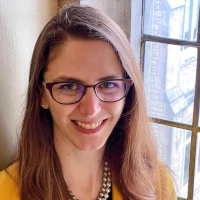
About Lisa Scheese, Ph.D.: Lisa Scheese is the Program Coordinator for the online Doctor of Education (EdD) in Educational Leadership program at the University of Missouri (Mizzou). This role includes teaching, advising, administration, and more. In addition to her work as EdD Coordinator, Dr. Scheese is the Bachelor of Educational Studies Program Coordinator and Assistant Teaching Professor in the Department of Educational Leadership & Policy Analysis (ELPA) at Mizzou. Dr Scheese views her work as focused on “making sure every single student is successful.”
Dr. Scheese’s professional background prior to her time at Mizzou includes extensive experience in administrative positions focused on student success and supporting underrepresented students, including Assistant Director and Interim Director for the TRiO Student Support Services program. She received her Ph.D. in Educational Leadership & Policy Analysis from the University of Missouri. Dr. Scheese also holds a Master of Business Administration with an Emphasis in Instructional Technology from Stephens College and a BS in Business Administration from Columbia College.
Interview Questions
[OnlineEdDPrograms.com] May we have a brief description of your educational and professional background, as well as your current role as EdD Coordinator of the online EdD in Educational Leadership program at the University of Missouri?
[Dr. Lisa Scheese] I started working in higher education when I was an undergraduate student. After undergrad, I spent a few years in corporate positions, but found that was not an ideal fit for me. What I really loved was working in higher education. I decided to take an administrative position in a Student Success Center. I went on to serve in various roles related to student success for close to 20 years before I became faculty at the University of Missouri. That provided an amazing foundation for me as EdD Coordinator, as I still focus on student success in administering the EdD program.
One of the primary things that I do within the EdD program is teach. Students see me pretty much every semester of their first year. I teach our educational leadership and organizational analysis classes. I also teach the first summer session when we begin introductory work on students’ Dissertations in Practice. Every other year, I teach our course on program evaluation.
I am also the first-year advisor for all students. Because I am seeing students on a weekly basis and working with them through the first piece of their dissertation work, it makes sense that I also advise and support students through that first year. I serve as the students’ advisor through most of the second year of the program as well, before they are turned over to their permanent dissertation chair.
The third prong of my work as EdD Program Coordinator is program administration. Part of that is making sure the curriculum stays relevant and that we have really good people in place to teach classes. It also means that I am constantly assessing our program to make sure it is doing what we say it will for our students. If I see a student who may be struggling, I am the first person, boots on the ground, to offer support to the student and make sure that they are getting back on track.
I am responsible for monitoring all of my students’ progress. At any given time, we have three cohorts running concurrently. That means we have about 90 students who I am constantly checking in with to make sure that they are being supported appropriately and that we are helping them meet their professional goals. Part of that is working to help them graduate within the three-year time frame of the program.
One of the reasons why I do administrative work is because I want to make sure that every single student that enters any of my programs is successful. My experience working in administrative roles has not only allowed me to build relationships with students, but also helped me see educational challenges within so many different educational spaces.
I work predominantly in higher education, but I have gained so much knowledge from building relationships with people working in PK-12 educational spaces and outside of those traditional areas as well. For example, we have students in corporate training. We have those who run their own educational consulting businesses. We have those in clinical education and healthcare roles. This really allows me to see what resources and supports students need. I am able to evaluate the needs that exist in different educational spaces so our program can help students upskill their backgrounds to be able to serve as leaders in those educational spaces more effectively.
[OnlineEdDPrograms.com] Could you please provide an overview of the University of Missouri’s online Doctor of Education (EdD) program in Educational Leadership, including the program’s structure and curriculum content?
[Dr. Lisa Scheese] I will hit the main highlights. Our website has more detail on every single class that is offered in the curriculum. We are a three-year, part-time EdD program. At our university, nine credit hours per semester are required to be a full-time student. Our students take six credits each of the three semesters they complete per year. This includes fall, spring, and summer semesters.
The EdD program is fully online. We have optional opportunities if students would like to come to campus, but campus visits are not required. Course delivery is a combination of asynchronous and synchronous work. It is a 54-credit-hour cohort program. This means we accept 30 students as a cohort each year, and those 54 hours of coursework are taken with that cohort. You cannot transfer in any of those 54 hours. However, the full degree program is 72 credit hours. To get from 54 to 72 credit hours, we transfer in 18 credit hours from your previous graduate-level coursework. Whether it is a master’s degree or an education specialist degree, we will accept 18 credit hours that make sense for an educational leadership degree.
In terms of the program’s curriculum, I will discuss the focus of each year. I use the word “upskilling” a lot because our students are coming in with really great skills, but education has a lot of complex problems. So we “upskill” them to be able to solve those complex problems. In the first year, we do this by focusing on foundational skills in educational leadership, so they are able to enhance their leadership abilities and make positive change in educational spaces.
The second year is focused on upskilling their research ability. This is when students take their methods classes. These courses give students the ability to dive into databases to explore research on complex educational problems, as well as the skills to research the educational problem of practice that they are invested in. Then, in the third year, students are working with their dissertation chair to collect the data that they are interested in researching. The rest of their dissertation work involves analyzing that data and making recommendations for change.
[OnlineEdDPrograms.com] What professional roles in education is the program designed to prepare students for?
[Dr. Lisa Scheese] We are and always will be a program that predominately serves leaders in PK-12 and higher education. Overall, I think of our degree program as preparing students for roles at the executive leadership level. Our alumni include people working in executive leadership roles like college presidents, principals, superintendents, directors, and vice chancellors.
However, because we think about educational spaces broadly, we have a smaller number of students who are in educational roles outside of those two areas. A student in our newest cohort is a clinical educator at a medical school. One of our students works at a dental school. We have two corporate trainers who work in different industries. We have a social worker. We have a behavioral health worker. All of these students are interested in executive educational leadership roles in their own areas.
I think the thing that ties everybody together is that their work in some way revolves around an educational space. We have these two areas, higher education and PK-12, that the program is specifically designed to serve. But some prospective students outside these areas have made the case that they are a great fit for this program too, because the focus of their work is educational. We have agreed with them and admitted them to the program. In that vein, our program requires students to have a master’s degree, but there is no specific requirement about what area that master’s degree is in.
[OnlineEdDPrograms.com] The EdD in Educational Leadership program is delivered entirely online. What are the advantages of the program’s delivery format, which blends synchronous and asynchronous learning, and provides optional in-person opportunities for students?
[Dr. Lisa Scheese] The asynchronous component is focused on content learning. Students do readings, complete activities, and, over the course of their first year, they participate in a journaling assignment. That is the asynchronous work. The classes are synchronous. We hold two classes on Wednesdays from 5pm to 8pm Central Time on Zoom. That is consistent for the duration of the program because all of our students are working professionals. We want to make sure that we set a regular meeting time to work with their schedules.
I think about the synchronous piece of the program as a flipped classroom. We are not going to spend time in class lecturing you. Students have already engaged with the material asynchronously. Instead, we are going to spend time as a group thinking about how to use these concepts to solve complex problems. This means there is a lot of group work early in the program, which starts to taper down as students begin working on their Dissertation in Practice.
It is to the advantage of the students to engage in group work. We are a group of educational leaders. It is very interesting to watch, from a faculty perspective, how a group of leaders comes together and interacts when everybody is in a leadership role: how they negotiate and how they navigate when to lead, when to follow, and how to collaborate. That experience in itself is actually upskilling. Whether or not students really realize what is happening, it is making an impact on the way that they approach their professional practice.
To provide examples of what we do in the synchronous sessions, students participate in case study activities where we apply the material to a particular case. Sometimes the cases are developed by the students. We do a lot of interactions in breakout rooms because we recognize the value in small-group discussion. We also have sessions where a student will be the facilitator and lead the other students through the material, drawing on their wide variety of backgrounds, professional experiences, and leadership skills. It has been amazing to see students really think about what aspects of the course material are applicable to their peers. What would their peers find engaging? What would they find useful? Students tend to really like that. We are facilitating connections with students very carefully because we want to create a sense of belonging, even in an online environment.
We offer optional in-person learning opportunities and social events. When students want to organize their own social events, we work with them to facilitate that. We are also strategic in working with our Graduate Student Association to make sure we have just as many virtual social events for students who cannot be there in person. We work with the Writing Center to make arrangements for students who want to come to campus to work on their dissertations. We have moved towards most of our guest speakers being virtual, but occasionally we have in-person options for a guest speaker as well.
As a department, we are also trying to more actively offer the opportunity for students to present their work. We have what is called ELPA (Educational Leadership and Policy Analysis) Day at the Capitol, where students who may want to come to Jefferson City and engage with legislative bodies at the Missouri state level can do so. We invite students to submit to a higher education conference, a PK-12 conference, and the CPED (Carnegie Project on the Education Doctorate) conference, which encompasses both PK-12 and higher education, and support students with their proposals. Our department works hard at finding professional development money for students to be able to travel to attend these events if they want to and has been very successful at securing that funding.
[OnlineEdDPrograms.com] What advantages does the program’s use of the cohort model have for graduate students?
[Dr. Lisa Scheese] There are many benefits to a cohort model. When I talk to alumni who have experienced programs that are completely asynchronous, I see a vast difference. Being in a synchronous cohort, especially when you have peers who are experienced in a wide variety of educational capacities, allows you to look at education at a higher level. The issues that we see in educational spaces are often systemic. What one person may think of as a PK-12 problem is usually not a PK-12 problem alone. If there is an issue in a PK-12 setting, that issue is going to impact higher education. When it impacts higher education, it is going to impact our future workforce. It hits all those educational spaces. One benefit of being in a synchronous online cohort with students from different professional backgrounds is that, when we work in groups and solve problems together, we can see the connections that exist between educational spaces and understand that systemic problems are not isolated issues.
Our message to students from orientation onward is, “You will learn as much from your peers as you will from faculty in the program.” All of the students who make up our cohorts have proven leadership at some level, whether that is in titled or untitled leadership roles. They have a great deal to learn from one another, and that level of peer engagement has the long-term benefit of building professional connections between students that last beyond graduation. I cannot say enough about the value of having 29 educational professionals that you have networked with and solved problems with for three years in your back pocket as a resource for solving complex educational issues after graduation. Most people do not have that, and that is an important benefit of being in a cohort model program.
[OnlineEdDPrograms.com] Would you elaborate on the opportunities for faculty mentorship and peer support that the program provides for students?
[Dr. Lisa Scheese] No student in our program gets to the last year of the program and ends up in a sink-or-swim environment where they are left on their own. I saw this happen and experienced this myself. You write something. You come back and tell the advisor that you have written something. The advisor gives you feedback on it, and then you are on your own to figure out how to move forward with that feedback. That is not what we do. That is not a good strategy for student success, and it does not help students feel supported.
We have a three-year timeline for a doctoral degree, which is an accelerated timeline. We want to make sure that the support systems in place allow students to meet that goal. You will be in a class throughout the dissertation process, and a lot of your dissertation work is done within that class environment. That is really nice, because you are making progress on the same timeline as your peers. It allows for the scaffolded production of work, as well as both faculty and peer review. We feel that peer review is just as useful as faculty review in the dissertation phase. We are intentional about trying to match peers that have similar topics, so that they are able to not only give one another advice on structural issues, clarity, and grammar but also give feedback on content, because they have the expertise in that area.
In designing the program, we stopped to think about how, in a fully-online, synchronous environment, we can connect peers on a deeper level so that they feel a sense of belonging. In week one, we initiate an online peer chat that the faculty are not a part of. A student volunteer sets up the group chat, and we make sure that it is something that every single person has access to — for example, it needs to be on a platform that is available to international students in the program.
Students also work in different groups over the course of the program. We put students into groups in their first year, which is done through a mixture of assigning groups and having groups assign themselves. We construct these groups intentionally so that students have the opportunity to work closely with different peers. Because these are 30-student cohorts, this is an important way to get to know everybody. We make sure that students have the opportunity to work with as many of their peers as possible during that first year.
The second thing that we do is find opportunities for students to connect with peers who have similar interests. This connects to what I mentioned earlier about peer review. When we are doing peer review, we often pair students who have similar backgrounds and professional expertise. But that is not always the case because that is not always what is needed. Sometimes you need people who are outside your professional area to be able to provide you with feedback as well.
Other times, students get to pick their group based on their topic of interest. The facilitator takeover is a great example. At the beginning of the semester, we present students with different topics that they could potentially facilitate. They submit their idea for the topic they would prefer to be the facilitator on, and we build groups based on what the students select.
It surprises students how close they get to their peers. They really do not believe, coming into the program, that they are going to have these close relationships or feel a sense of belonging. They think they are going to be operating in silos. We put in the effort to pick great students for our program and then ask, “How can we connect these students? How can we create an environment that helps students feel like they have the ability to form relationships with their peers?”
[OnlineEdDPrograms.com] The University of Missouri is a member of the Carnegie Project on the Education Doctorate (CPED). How has the EdD program’s involvement with the CPED Consortium informed the design of the program and what other benefits does it have for graduate students?
[Dr. Lisa Scheese] In my experience, CPED is a professional association that is truly focused on making the EdD supportive and relevant. Some other associations that I am a part of are almost competitive environments. CPED is not like that. For CPED members, the goal is to make things better for our programs and for our students. We look at each other as colleagues. We are not gatekeeping any information. If we have a great idea that has worked well, we are willing to share that.
For example, I recently did a CPED self-assessment of our program, where I worked with other institutions to see if we are actually doing what we say we are going to do with our EdD program. The CPED framework is directly tied to our program goals. That helps us make sure that our program goals are tied to our course goals, and our course goals are tied to our learning goals, so that every student receives a high-level experience. The outcome of that project showed us that we were doing a lot very well, but still had room to grow.
CPED also provides a number of resources and opportunities for our graduate students. There is a database of Dissertations in Practice our students have access to, which gives them models to consult in their own dissertation work. CPED provides workshops for doctoral students, and we invite our students to participate in those. The nice thing about these workshops is that they are all on Zoom. No matter where they are located, our students have the opportunity to attend. We also just received funding that will let us take a group of students to the CPED conference each year, where they will present about their doctoral experience. That is something they can add to their CVs as a professional development experience.
[OnlineEdDPrograms.com] For their culminating experience, students research and write a Dissertation in Practice. Would you tell us a bit about the dissertation requirement and the support the program offers to students in the dissertation writing process?
[Dr. Lisa Scheese] Prior to the COVID-19 pandemic, this program was part of a statewide cooperative EdD program. During the pandemic, we redesigned the EdD program to be fully online. When we did that, we completely rethought the Dissertation in Practice. What makes a Dissertation in Practice unique is that it does not just attempt to understand a problem; it aims to propose a solution to the problem under examination. In that respect, students become part of the change process. They are not just passive observers.
In my own experience getting a Ph.D., the goal was understanding the process you were researching, but it was not focused on changing that process for the better. The conclusion was, “Now that we understand this, we should go further and understand it more deeply in this direction.” That is not the Dissertation in Practice. The Dissertation in Practice’s goal is to impact practice according to the findings of the student’s research.
We have also changed the Dissertation in Practice so it is written for a practitioner audience. The project is significantly shorter. The average length of the Dissertation in Practice for our students is 30 to 50 pages, which makes much more sense. No practitioner in the world is going to sit down with a 200-page dissertation and read it all the way through. Nobody has the time to do that. We have students write in a format that can actually be used by people in the field.
Students are never working on the Dissertation in Practice completely on their own. They always have a support system in place. A lot of the dissertation writing is embedded in the coursework of the EdD program. In Spring One, you develop your idea. In Summer One, you investigate what the current research says about your problem of practice. Then, the next year, you look at how you could approach that problem of practice through different methodologies. Our students take a quantitative methodology class, a qualitative methodology class, and a program evaluation class. Those are the three most common methodologies our students pick when they are approaching their Dissertations in Practice. We think of those classes as applied. We teach these methodologies with a focus on how to use them to actually solve educational challenges.
In Summer Two, you decide on your approach to researching your problem and add your methodology section. You defend the dissertation proposal at the beginning of year three, which is spent collecting data, analyzing that data, and making recommendations for changes in practice. This proposal also meets the comprehensive exam requirement laid out by the Graduate School.
To give an example of a recent student dissertation, I will discuss a winner of our Dissertation in Practice of the Year Award. This past year, the winning dissertation examined IDEA (Individuals with Disabilities Education Act) compliance within New York City public schools and focused on the academic outcomes of high school students with disabilities. They looked at 319 public high schools in New York City. Interestingly, the findings showed that there was compliance with the law, which is necessary, but that compliance was not sufficient to improve student achievement. The suggestions that came out of the study were very concrete ideas about how New York City public schools could go beyond procedural compliance towards examining the quality and instructional impact of IEP (Individualized Education Program) services.
[OnlineEdDPrograms.com] Do you have advice for prospective students who are interested in applying to the University of Missouri’s online EdD in Educational Leadership program that would help them optimize their applications?
[Dr. Lisa Scheese] I hold workshops on this question, because we do not want to gatekeep any information that would help students succeed. Every single time that I talk to a prospective applicant, I tell them five things. First, in their application materials, they need to clearly explain why they want to pursue an EdD. I have seen applications come through our program before that essentially said, “I just want to be a doctor one day.” Those applicants did not get selected. That approach is not going to get you admitted to a high-quality EdD program. Be very specific. Why do you want to get an EdD?
The second piece is that students need to explain why they want to attend this particular program. Why Mizzou’s Educational Leadership program versus a program at another institution? There are a lot of great EdD programs out there. We want to know why you want to be with us. We are so interested in that question because a doctoral degree is not an easy degree to get. It requires time, commitment, and work.
The students who are the most successful in any EdD program are the ones who feel an affinity towards the department that is offering the EdD program. That is typically because their value system and their goals match those of the department. I tell every single person who is interested in applying to an EdD program to visit the website of that program and see what its mission, vision, and goals are. Do they match your mission, vision, and goals? If they do, you are probably going to be a great fit. Be very specific about what resonates with you about that mission, that vision, and those goals in your application materials.
The third thing is that students should demonstrate that they are ready for doctoral-level education. This is largely based on the samples of writing that we see, the way students are able to communicate in their application materials, and their recommendation letters. The best recommendation letters that we receive are the ones that say, “I know this person in this capacity. I know what a doctoral degree requires. These are the things about this person that make me know, 100%, that they would be successful in an EdD program.” We love seeing that. Please ask your recommenders to be very specific about that.
The fourth thing I recommend is to be deliberate about how you communicate about your leadership. We look at leadership broadly. We recognize that, in educational spaces, leadership is titled and untitled. A lot of folks wear many different hats. If you do not have a title saying you are in a leadership role, that does not mean it is not leadership experience. People clearly communicating about their leadership is often the deciding factor in a competitive admissions process.
The last thing that we look for is students who can demonstrate their commitment to creating positive change in educational spaces and speak to their prior experiences creating change. That is who we want. We want changemakers. We want folks who are committed to creating positive change and can be specific about how they intend to do so.
[OnlineEdDPrograms.com] What distinguishes the University of Missouri’s program from other online Ed.D. programs and makes it an exciting choice for prospective graduate students? How do you see the program developing over the next five to ten years?
[Dr. Lisa Scheese] Sometimes we laugh about how the tagline for the Department of Educational Leadership and Policy Analysis should be “ELPA is everywhere.” If you are in a high-level educational space, whether that is in Missouri, regionally, or nationally, you will almost always find an ELPA alum in an executive-level position. I cannot emphasize enough how beneficial it is to be connected to a program that has so many successful alumni who are out there trying to make a positive change in education. I think that is so valuable. Our alumni are very involved. They have a very strong affinity for ELPA and are willing to serve the current and future ELPA students in a variety of supportive ways. We connect our alumni with our students quite frequently, which is very important.
Another thing that makes our program stand out is that our faculty truly love EdD students. We are excited to see them. We are excited to see how they are changing practice. We view our students as humans first. That is so important for a doctoral program. We are committed to helping our students with their personal and professional goals.
We are also entirely committed to continuous improvement, which informs our future goals for the program. We are constantly working to figure out how we can better meet the needs of our students. If the goal of our program is to help our students go out and solve complex problems in education, and the complex problems in education are changing every single day, everyone loses if we are not focused on continuous improvement and figuring out ways to keep our curriculum relevant. We are constantly assessing ourselves, from student assessments all the way up through HLC (Higher Learning Commission) accreditation. Our priorities are to support our students and to make sure we are teaching them skills that will be relevant to their careers when they graduate from the program.
Thank you, Dr. Scheese, for sharing your insight as EdD Program Coordinator in discussing the University of Missouri’s online EdD in Educational Leadership program with us!