

Interview with Susan Marine, Ph.D., About Merrimack College’s Online Ed.D. in Educational Leadership Program
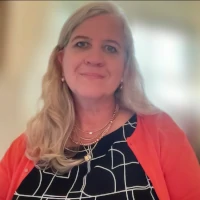
About Susan Marine, Ph.D.: Susan Marine is the Program Director for Merrimack College’s Ed.D. in Educational Leadership, and is also a faculty member in the program. Prior to serving in this role, she taught in and directed Merrimack’s Master’s in Higher Education degree for 15 years. Dr. Marine is a Full Professor, which means she also has an active and extensive research life. She studies how colleges can be better places for LGBTQ+ students, faculty, and student affairs administrators, how student activists can be supported and sustained in their work, and how sexual violence can be prevented, effectively responded to, and eventually ended on college campuses.
In her role as Program Director, she is responsible for coordinating the curriculum, hiring and mentoring Merrimack’s part-time faculty, developing academic support resources, building collaboration with other faculty and programs at Merrimack, and assessing and evaluating the Ed.D. program, among many other roles and responsibilities. Leading the Ed.D. program is truly a joy for her, as she savors having a ‘no two days are the same’ professional life. Because Dr. Marine teaches in the program and advises 30 of its current students, she is keenly aware of students’ experiences, needs, and concerns, and continually works (along with the other faculty) to build and improve the Ed.D. program.
Interview Questions
[OnlineEdDPrograms.com] Will you please provide an overview of Merrimack College’s Doctor of Education (Ed.D.) in Educational Leadership program?
[Dr. Susan Marine] The Merrimack Ed.D. program has three areas of focus: providing students with strong learning in contemporary leadership theories, constructs, and paradigms that enliven and enrich the practices of educators and human service professionals; engaging students in a deeply scaffolded and intentional research experience as they move from first semester students, to doctoral candidates, to successfully completing their dissertations; and applying both experiences in pursuit of a selected concentration – School Leadership, Organizational Development Leadership, or Innovative Curricular Leadership. The program is 44 credits, and is ‘low synchronous,’ which means all of our coursework is both online and asynchronous, but we offer optional supplementary synchronous experiences, including a two-day residency, for students who are interested in participating.
In terms of the concentrations, School Leadership is designed for those who wish to advance in leadership within either a private or a public P-12 school or system within a school district or who want to serve in a consultant role pertinent to P-12 education. The concentration features coursework in law, ethics, planning/strategy, and dynamic team leadership. We also offer a course for P-12 school counselors who wish to advance to a leadership role in that domain that focuses on effective supervision and resource management.
Organizational Development is designed for professionals in both higher education and non-profit leadership, who share many skill development needs and interests. This concentration focuses on leading teams, law and ethics beyond the P-12 space, strategic planning, and advanced communication skills. Finally, Innovative Curricular Leadership is designed for educators across P-16 environments who teach or develop curricula and want to build their pedagogical, planning and resource allocation and management skills. We offer different courses in this concentration for those teaching in K-12 schools,those teaching in higher education, and those who lead training and development within non-profits.
Our program was intentionally designed for leaders with three different professional profiles: P-12 school leaders, including seasoned classroom teachers and administrators at the school and district level; higher education leaders, including both current and aspiring faculty and administrators; and non-profit leaders, including front line staff in a leadership role, managers, and leaders of Boards of Directors.
Currently, our students come from each of these populations. About 40% are school leaders, 30% have higher education as their professional context, and 10% are non-profit leaders. We recommend that students consider and apply to our program with a minimum of three years of full-time professional experience in their field, so that the coursework is relevant to their practice and they can bring real-life examples, including leadership dilemmas they are facing, into the classroom with them. Most of our current students have 10+ years of experience.
[OnlineEdDPrograms.com] The Educational Leadership Ed.D. program is offered fully online. Would you describe the online instruction methods the program uses for coursework, faculty interaction, and peer-to-peer discussion and collaboration?
[Dr. Susan Marine] Our program runs entirely on the Canvas learning management system and takes full advantage of advanced tools for student engagement, academic development, and support. As noted above, we are a fully asynchronous program, though we do offer regular synchronous learning sessions in all courses for students who would like to engage in person with faculty and peers. These “synchro-sessions,” as we call them, take place about every three weeks in each course. They are recorded so those who cannot attend can view the recordings at their convenience.
Our program also includes a two-day residency at the start of the first and second year, where the focus is on community building, academic skill development, and deep dialogue around issues of leadership, student development, and maintaining holistic well-being while managing the demands of a doctoral program designed for full-time working professionals. The residencies – which are also offered virtually on Zoom for students who cannot attend in person– include an intentional balance of didactic teaching, group dialogue sessions, meals, walking tours, and informal socializing. While both options are helpful to students beginning the program, the in-person residency is evaluated extremely positively by students who have attended to date, and we strongly encourage students to choose this option if they can make the journey to Merrimack’s beautiful campus, which is 20 miles north of Boston.
[OnlineEdDPrograms.com] For their final graduation requirements, students of Merrimack College’s Ed.D. in Educational Leadership complete a Dissertation in Practice. Could you explain the dissertation research process students undertake?
[Dr. Susan Marine] Merrimack’s program is unique in that every aspect of the dissertation process is embedded in coursework, so as students make their way through the program and complete courses, they also make progress on completion of their dissertation. Each segment of the dissertation is a credit-bearing experience, and each must be passed before students can move on to the next segment. This is the way that we ensure that students feel highly supported, as well as highly accountable for completion of different pieces of their dissertation project.
The Dissertation in Practice model is based on a few different assumptions. First, that educational researchers are best equipped to both deeply understand, explore, and address issues of practice that are in their current domain. In other words, that we are best equipped to solve the problems that are right in front of us. The Dissertation in Practice model supports students in selecting a problem of practice that is of current and deep concern to them as leaders and practitioners in their current context and in developing a meaningful plan for both researching it and addressing it with a creatively designed, evidence-informed intervention. Our students will use this process as a confidence building exercise that helps them see themselves as both a leader and a visionary problem-solver.
Because our model engages students in addressing challenges within their current context, their dissertation research is highly applicable to their domain and sphere of greatest influence. Their research emerges within a uniquely and inherently reciprocal relationship that is developed between researcher and research participant. Merrimack Ed.D. students will use qualitative, quantitative and mixed methods approaches to address their problems of practice, which will vary depending on the nature of the problem and the context they are operating within. Our research methods courses will introduce them to a variety of current, equity-based methods for educational research, including case study, survey design, phenomenological research, participatory action research, and ethnography.
[OnlineEdDPrograms.com] Will you discuss the faculty mentorship opportunities available to students of the online Ed.D. in Educational Leadership at Merrimack College?
[Dr. Susan Marine] Students in the Merrimack Ed.D. program begin with an assigned advisor whose background and experience corresponds closely to their professional expertise, whether in P-12, higher education, or in human services nonprofit contexts. As they move into the process of developing their research proposal, identifying both their specific problem of practice, their methodological approach, and the unique aspects of their current context, they will be matched with a dissertation chair who has the greatest expertise in the specific problem of practice they are studying, and who is also well-versed in the methodological choices they have made. This way, students will have the benefit of engaging deeply with multiple faculty during their time in the program, including with their original advisor, chair and committee members. We take the chair assignment process very seriously and have developed a process that will ensure students are working with a skilled and qualified expert, whose background and research experience will support them in developing their own skills and agency as emerging researchers and leaders.
Students are welcome and encouraged to connect with faculty at any time for one-on-one or small group consultation, and faculty in our program provide ample and meaningful feedback on students’ writing and presenting skills toward the goal of helping them become more confident and more proficient scholars. Through the residency experience, students get the chance to know faculty not only as teachers but also as advisors, mentors, and allies in the scholar practitioner development process. Although our program is asynchronous, we are committed to developing individual and meaningful relationships with each one of our students and guiding them in their unique journeys.
[OnlineEdDPrograms.com] Do you have advice for prospective students who are interested in applying to Merrimack College’s Educational Leadership Ed.D. program that would help them optimize their application?
[Dr. Susan Marine] When we are reviewing applications for our program, we are looking for a few different qualities in our students. First, that they can speak directly and authentically to their motivations for applying to the program, whether those be a specific form of career advancement, learning to become an expert in a particular field, or wanting deeply to contribute to leadership in the work they are doing currently. We expect that applicants to our program should be able to articulate, at least in a broad and general way, the areas of research and practice that most motivate them to learn deeply, to develop new skill sets, and to use those skill sets to improve their practice.
Finally, because our program is both demanding and supportive, we look for students to have demonstrated academic success in their previous coursework — in their master’s degree or even post-master’s work — which signals to us that the demands of the Ed.D. program will be manageable and that the support will be welcome. In our experience, successful students already know how to ask for help and additional guidance when they need it, and this typically shows up in the way they present themselves through the personal statement. Because we have adopted the program design emphases of the Carnegie Project on the Education Doctorate (CPED), we expect that every one of our students chooses a problem of practice that will, in some meaningful way, advance equity in educational or human services spaces.
It is always welcome when applicants speak authentically and share who they are and what motivates them, whether that is related to their professional life or other aspects of who they are as leaders and human beings.
[OnlineEdDPrograms.com] What makes Merrimack College’s Ed.D. in Educational Leadership a distinct and exciting choice for prospective graduate students in educational leadership?
[Dr. Susan Marine] In addition to a deeply committed faculty team, we have an exceptional team of student support specialists that help our students to be successful, including our Graduate Success Coach, Sarah Perry, our academic coach, Dr. Kim Burns, and our superlative team of research specialists in Merrimack’s McQuade Library. We constantly work to seek student feedback in order to improve the program and to ensure students’ needs are met.
We foster peer connection through many different activities, including through our in-person residency option (two days on Merrimack’s campus at the start of the program), structured writing events, skill development workshops, and Communities of Practice built into our courses. We encourage students to also organize social gatherings informally on their own, including online.
We offer significant transfer credit to students who have earned a CAGS (certificate of advanced graduate study) within the last five years. We also have two entry dates – Fall (August) and Spring (January).
Thank you, Dr. Marine, for taking the time to speak with us about Merrimack College’s Ed.D. in Educational Leadership program.